Hot fill, ambient fill and the tub shape that keeps pace
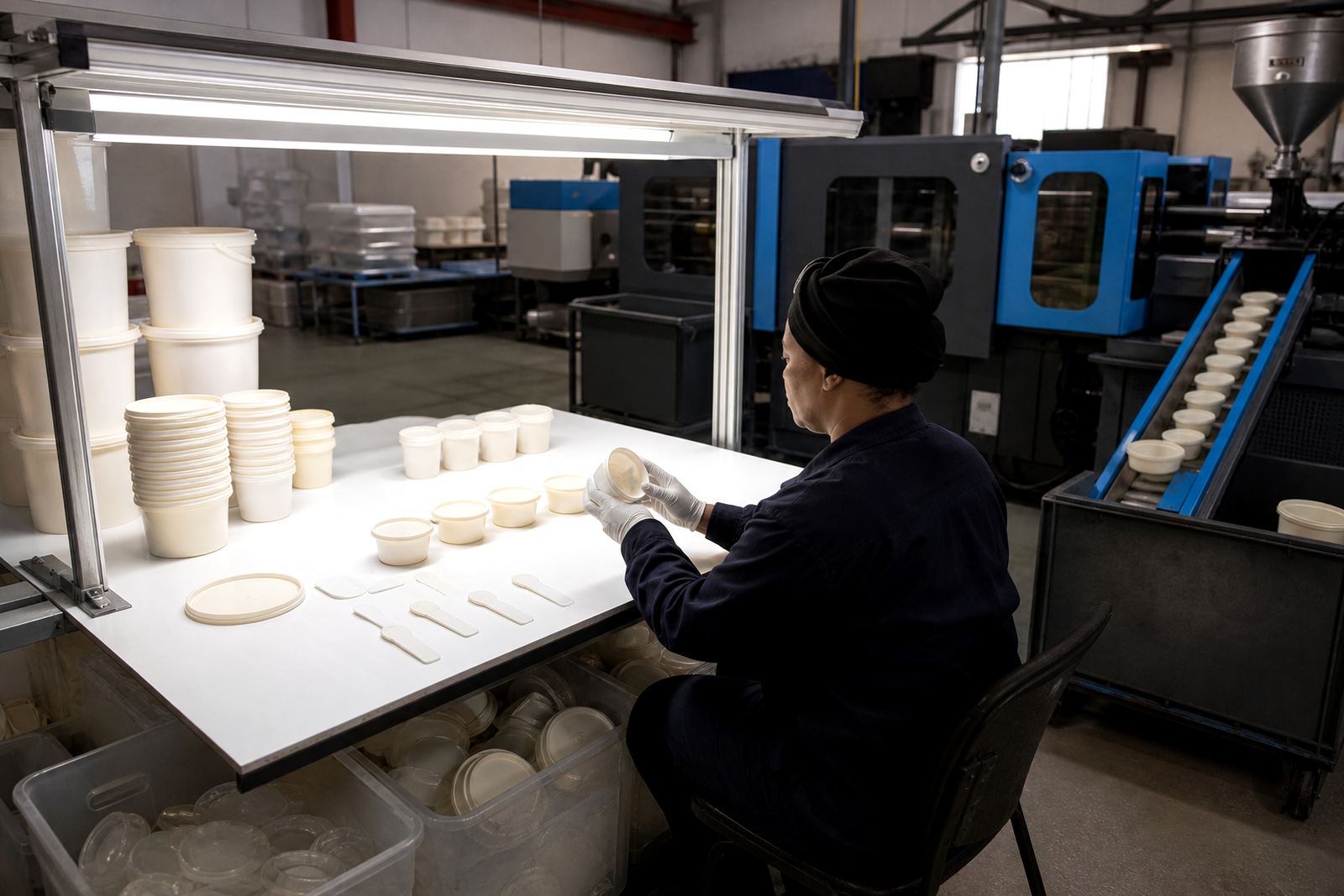
Sauce packs behave differently from dry goods. A warm chutney, a coarse relish or a glossy table sauce can move through a filling line at a different speed, and the tub has to stay steady while that happens. Injection-moulded containers give a repeatable wall thickness and a neat finish, which helps when a line is working with small portions, mid-size family tubs, or retail formats that must stack well in cartons.
For sauces and relishes, polypropylene is often used where a lighter tub and a cleaner snap-fit lid are needed. HDPE suits packs that need a firmer feel and strong resistance to handling in distribution. Both materials are used for food packaging in established processing environments, and the final choice depends on the product, the fill temperature, the closing method and the shelf presentation.
In Alberton and the wider Johannesburg industrial belt, many packers also need tubs that travel well in mixed loads. The walls must resist minor knocks, the base must sit flat on a packing line, and the lid profile should give a tidy seal without wrestling the product into place.
Typical set-up for sauces, chutneys and relishes
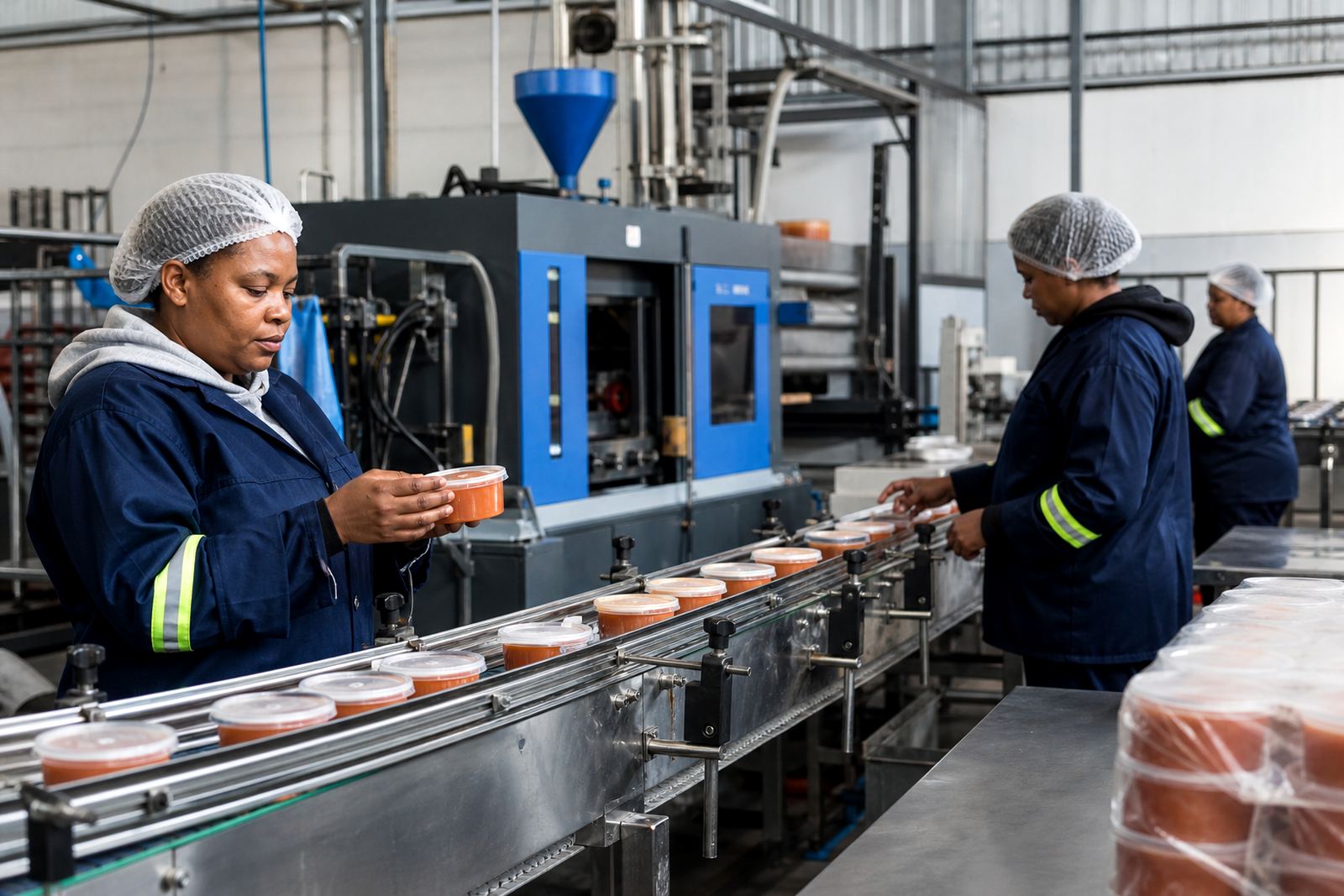
A sauce line usually needs more than a single tub. The container, lid, seal and pack format should work as one unit so that filling, closing and boxing stay predictable. When the pack size changes, the label area, headspace and carton pattern often change too. That is where line fit checks matter, especially when a packer is moving between ambient products and warmer fills.
- Injection-moulded tubs in polypropylene or HDPE
- Matching lids for snap fit or press-on closing
- Tamper seals for retail packs and resale confidence
- Trial production runs for lid fit and line handling
- Pack size planning for single portions, family packs and foodservice tubs
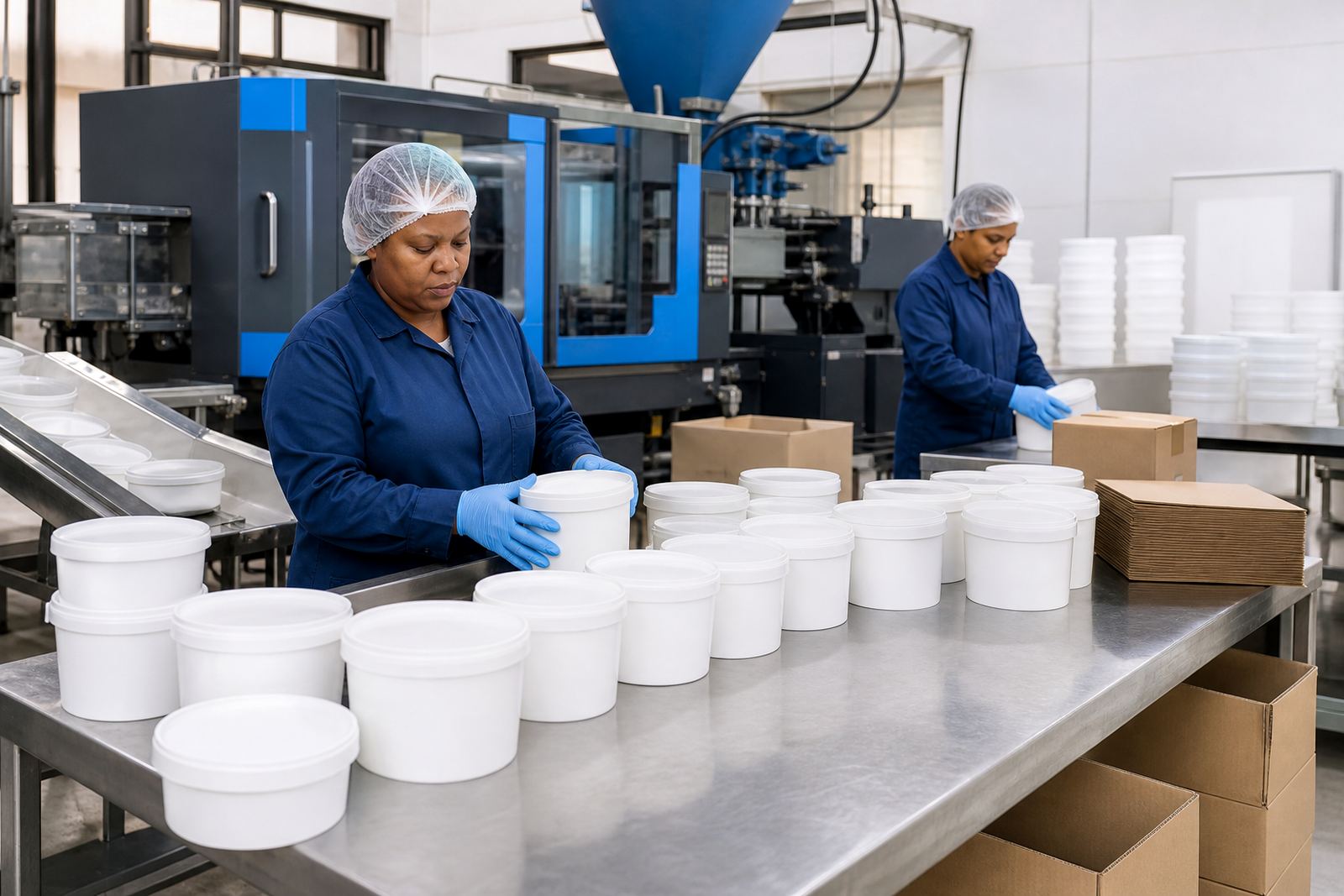
Secondary packing also matters. A tub that performs well on its own can still give trouble if cartons are too tight, too loose, or set up for the wrong stack height. That is often where a small adjustment saves a lot of waste on the floor.
How the line layout affects the final pack
Condiment packs are often filled in a busy room where product changeovers, labelling and boxing happen in sequence. If the tub footprint is wider than the packer expected, the carton count drops. If the lid profile is too shallow, the closing station may struggle with alignment. A good layout starts with the container dimensions, then works back to the filler, closer and carton pattern.
Colour matching guidance can also matter for sauces and relishes. A clear or natural finish suits some products, while other brands want a colour that separates one range from another on shelf. The aim is not decoration for its own sake. It is to make the pack readable, familiar and easy to handle in stores from Pretoria to Cape Town.
- Check tub diameter against your carton grid
- Allow enough headspace for hot fill movement
- Keep the lid profile compatible with your closer
- Confirm that the seal tears cleanly without distortion
- Test handling after cooling and before palletising
Where sauce packs usually go wrong
Most problems begin with assumptions. A packer may start with a tub that looks right in hand, then find that the lip distorts during closing or the seal lifts after cooling. Another common issue is choosing a size that suits the recipe but not the packing line, which leads to awkward spacing, slower boxing and more handling than necessary.
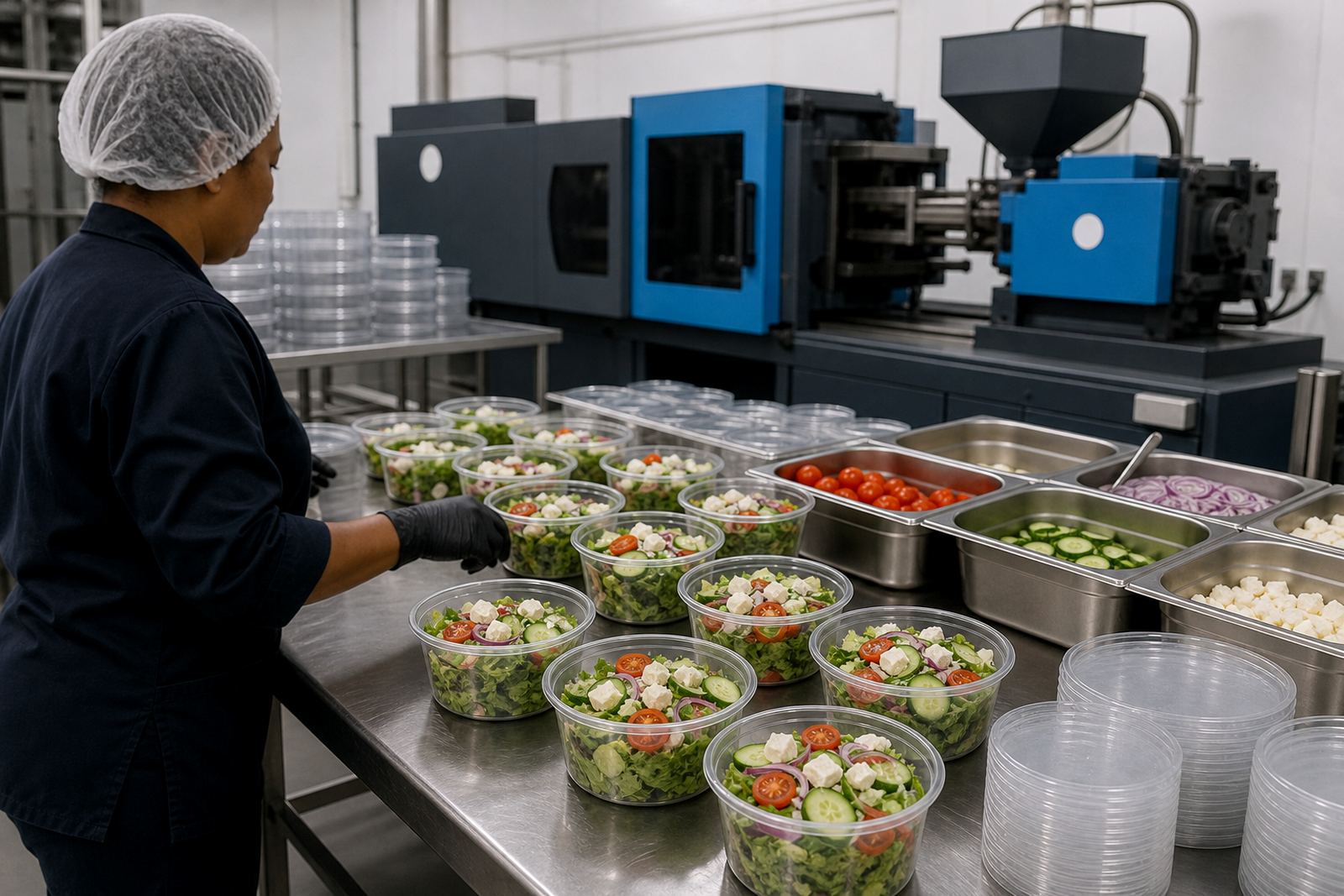
For relishes with pieces, the fill can bridge or settle unevenly if the neck opening is too narrow. For smoother sauces, the issue is often headspace and closure pressure. If the line uses hot fill, the material needs to suit the temperature shift, otherwise the pack can bow or draw in after cooling. In coastal areas such as Durban and Port Elizabeth, storage conditions also deserve attention because humidity can affect outer packaging and label handling.
Trial production runs help expose these issues early. A short run may show that the lid needs a firmer profile, the tamper seal needs a different tear point, or the stock run plan should allow for a larger carton count per pallet. Those are practical fixes, not cosmetic ones.
Budget planning in rand for the first run
Budget is shaped by several pieces at once: the container size, the lid style, seal detail, colour choice and the number of pieces needed for a run. A simple range for standard tubs, without special mould changes, usually sits at a lower level than a fully developed custom pack. Once a new mould is needed, the spend rises and the line trial work becomes part of the planning.
For sauce and relish packs, some businesses start with development and small trial quantities in the low tens of thousands of rand. Mid-range orders with custom tubs, lids and seal work can move into higher five-figure territory. Full mould development, line checks and larger stock planning can sit well above that, depending on the size and complexity of the pack. The exact figure depends on the format and the quantity, not on the product name alone.
Businesses in Johannesburg, Durban, Cape Town, Pretoria and Port Elizabeth often compare the full pack cost rather than only the tub price. That is the practical view, because a cheaper container can cost more once boxing, wastage and line stoppage are counted.
What tends to be requested for condiment ranges
Many condiment packers ask for a container system that can handle more than one recipe. A chilli relish may need the same tub family as a tomato-based sauce, while a thicker chutney may need a slightly different lid depth or a stronger closure feel. That is where material selection and lid development work together, so the pack range stays consistent on shelf and in distribution.
Plastic Factory works from Alrode, Alberton and supplies businesses across South Africa, including Alberton, Germiston, Boksburg and the major metro routes. The team looks at the product, the packing line and the secondary pack together, then builds a practical container set for the job.
- Custom Tub Design for sauce and relish sizes
- Lid Development for retail and foodservice packs
- Tamper Seal Design for shelf confidence
- Material Selection for polypropylene and HDPE use
- Trial Production Runs and line fit checks
For enquiries, clients use the form on the contact page. That keeps the pack details together, which helps when the discussion covers tub dimensions, closure type, fill temperature and the pack size planning needed for a real production line.