Tubs That Suit Thick, Semi-Solid Fills
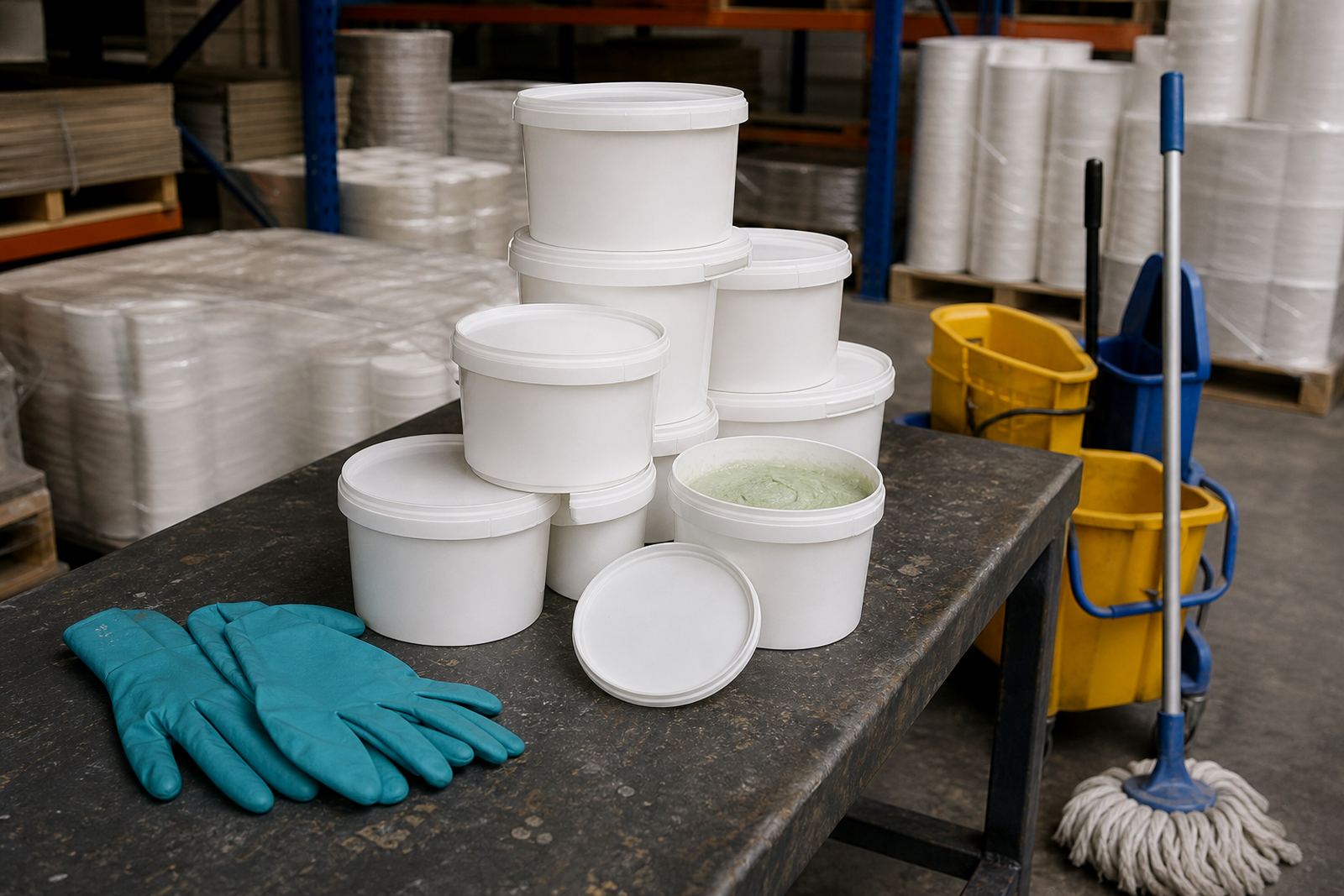
Ointments and balms move differently to lotions or liquids. They need packaging that accepts a dense fill, keeps its form on the shelf and closes cleanly without leaving product on the rim. For this reason, small injection-moulded tubs are often the first option for lip balms, medicated ointments, barrier creams and similar products packed in short runs or steady volume lines.
Polypropylene tubs are widely used for everyday cosmetic and healthcare fills because they handle frequent opening and closing well, while HDPE suits many products that need a slightly tougher feel in the hand. Both materials are familiar to packers, filling rooms and dispatch teams, and both can be supplied in sizes that work from sample packs through to retail units. A good container for this type of product needs straight walls, a stable base and a lid that sits without wobble, otherwise the fill line and the final pack look untidy.
- Small tubs for lip balms, ointments and travel packs
- Wider low-profile containers for thicker semi-solid products
- Lids matched to the rim profile, with tamper options where required
- Clear, white or coloured bodies depending on the range
What The Pack Line Usually Needs To Work Properly
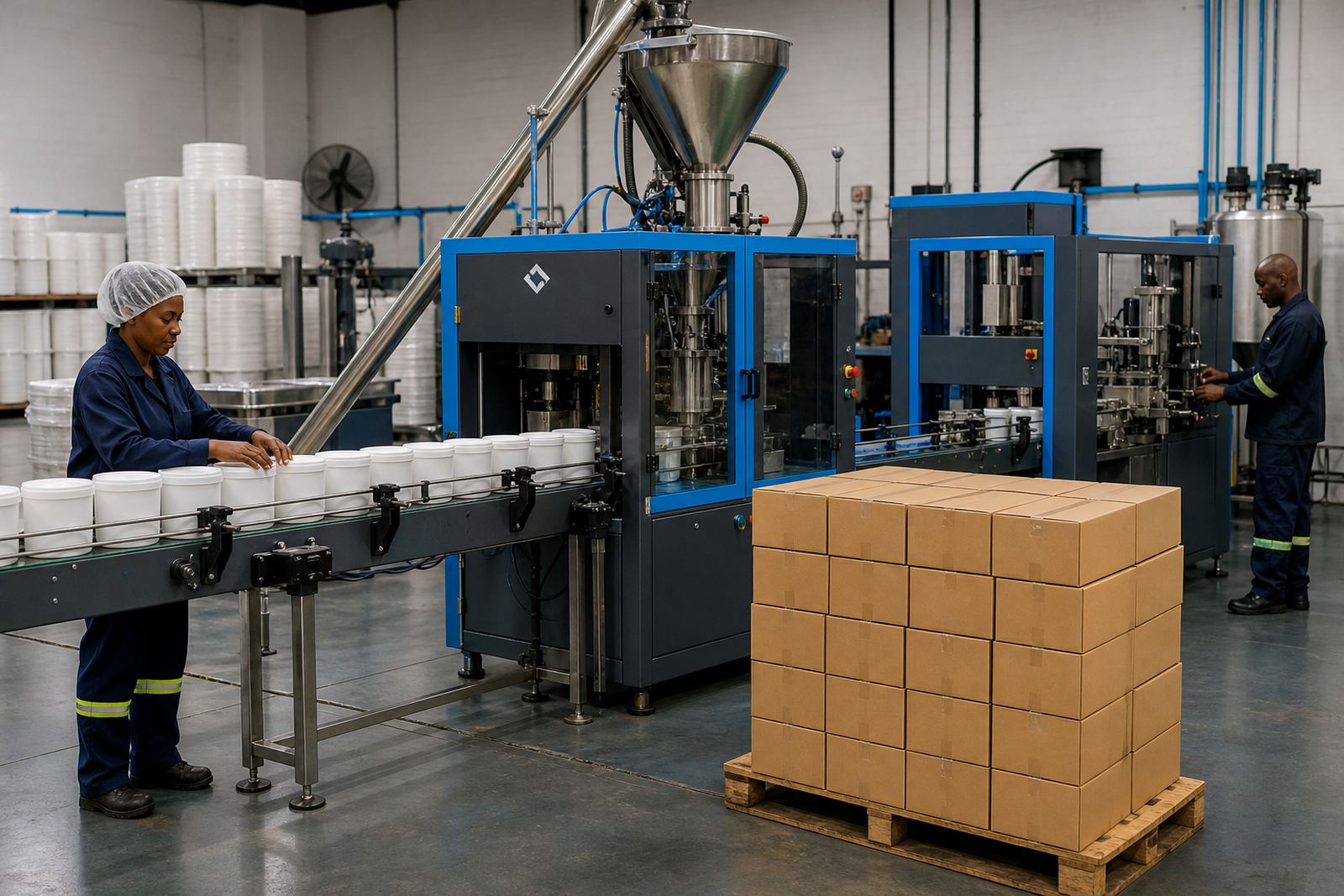
Packers of ointments and balms often run a straightforward line: bulk product at the start, fill heads in the middle and capping or sealing at the end. The container and lid must suit that flow. If the tub is too narrow, product can smear the rim. If the neck finish is too loose, the lid may sit unevenly and make the pallet look untidy. If the seal is awkward for the operator, line speed drops and the room gets messy before the shift is half done.
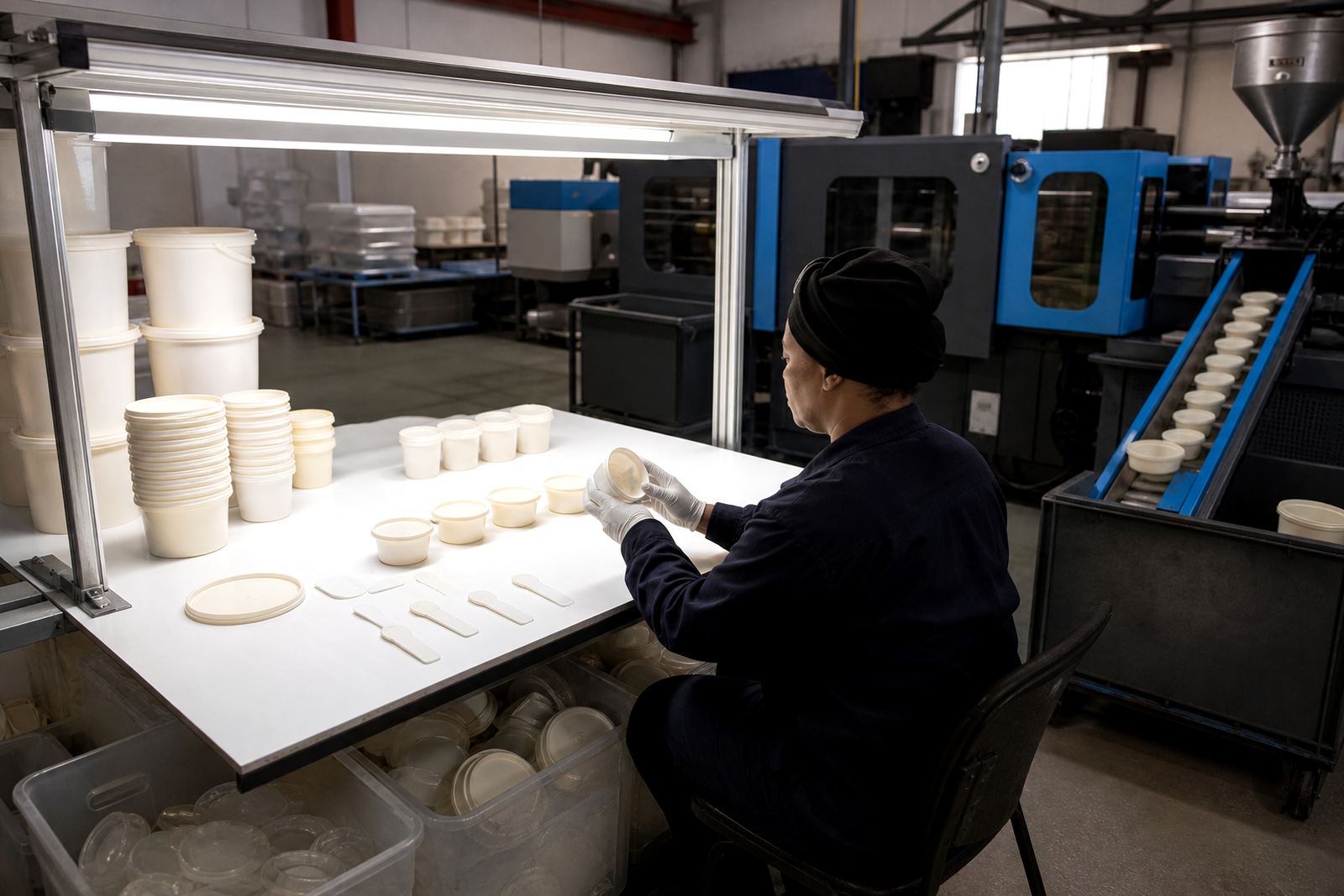
Plastic Factory works with these practical details when planning a tub. A line-fit check helps to see how the container behaves under normal handling, while trial production runs show whether the pack loads neatly into sleeves, cartons or shrink-wrapped bundles. In many cases the packing team also wants guidance on secondary packing, especially where small tubs are grouped for pharmacies, salons or cosmetic counters.
- Fill opening sized for hand fill or semi-automated filling
- Lid height that allows clean stacking in cartons
- Tamper-evident features where the product range calls for them
- Pack size planning for retail, clinic and bulk dispatch orders
Material Choices For Balm And Ointment Ranges
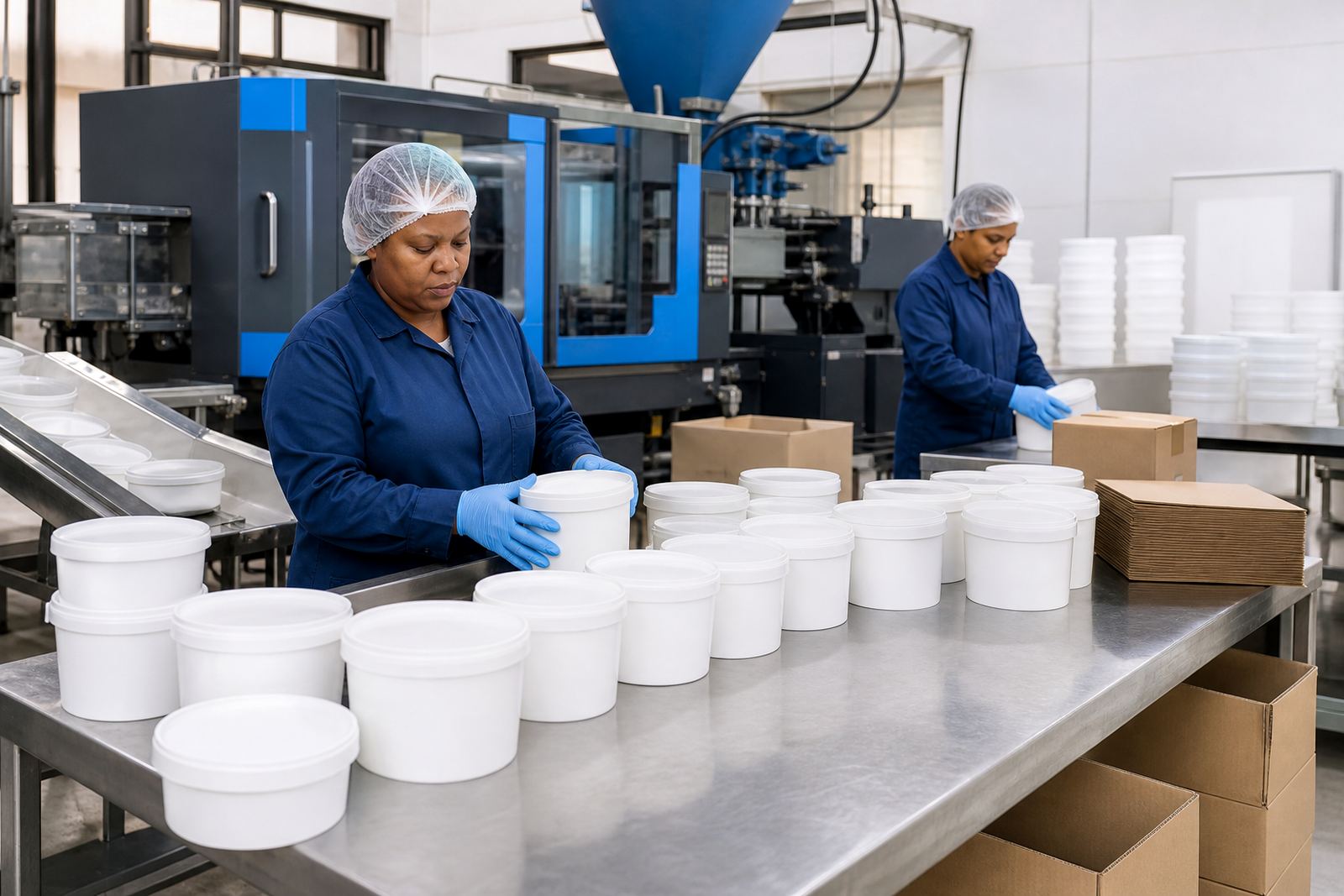
Material selection matters because these products spend time in warm stores, delivery vehicles and shelves near windows or counters. Polypropylene is often selected for its balance of stiffness and light weight, while HDPE is common where a slightly more flexible body helps the pack tolerate knocks in transport. Both are used in established injection moulding processes, where molten plastic is formed under pressure into a consistent tub or lid shape.
For cosmetic and healthcare packers, the question is not only the material itself but how it behaves with the product, the closure and the label. Some ointments are oily, some balms are waxy, and some blends are sensitive to staining or surface marking. A matte or gloss finish can change the shelf appearance too, especially when the product is sold through pharmacies in Gauteng, salon channels in Cape Town or distribution houses in Durban.
Colour matching guidance is useful when a range needs a family look across several sizes. A light tint can help with brand presentation, while natural or opaque colours are often preferred for clinical or utilitarian packs.
Layout Notes For Small-Pack Production In Alrode
At our Alrode base in Alberton, product planning usually starts with the fill size, then the closure type, then the secondary packing method. That order helps avoid common problems such as a lid that works on a sample but slows down the line, or a container size that looks neat in isolation yet wastes carton space. For balms and ointments, small changes in diameter or wall height can affect how the product presents on the shelf and how many units fit into a dispatch carton.
Dispatch also needs thought. Johannesburg and Germiston orders may move on mixed pallets, while Durban and Cape Town deliveries can face long travel times and warm loading areas. In coastal humidity, cartons and sleeves need to be packed with care so the outer pack stays tidy and the tubs do not rub against each other. The right plan reduces handling problems, even when the goods change hands several times before reaching the final packer or reseller.
- Keep one tub family across several fill weights where possible
- Allow enough headspace for thick product and a clean close
- Match carton counts to the way dispatch actually loads vehicles
- Check pallet height against warehouse handling limits
Common Mistakes With Balm And Ointment Packaging
One common mistake is picking a container by appearance only. A smooth shape may look neat on a sample tray but prove awkward on the packing line. Another is underestimating the product texture. Thick ointments can cling to the rim, while softer balms may deform if the lid pressure is uneven. The result is wasted product, more hand cleaning and a pack that looks tired before it reaches the customer.
Another trap is running too many sizes with too little planning. Three or four tub sizes can work well if the team has enough label variation, carton control and storage space. Beyond that, stockholding gets messy. Ongoing product updates help when a range grows, but the updates should be tied to real production needs, not just a new artwork request.
- Choosing a lid that does not sit square on the rim
- Ignoring how the fill behaves around the neck finish
- Ordering too many pack sizes for one product family
- Skipping a trial run before full production
Rand Budgets For Small Tub Projects
Budget range depends on container size, tooling needs, lid style and whether a tamper seal is part of the pack. For a straightforward existing-style tub with standard lid matching, smaller project budgets can start at a modest level, while more involved custom work sits higher because mould development, testing and packing checks take more planning. In practical terms, smaller cosmetic and healthcare tub projects often begin around the low tens of thousands of Rand for setup work, with larger custom projects moving into the higher tens of thousands or more when the specification becomes more complex.
For ongoing supply, the unit cost is shaped by order volume, colour choice, lid type and any secondary packing requirement. A plain pack in a standard colour usually costs less to run than a special colour matched set with a tamper feature and dedicated carton plan. Naledi Sauls, Johan Kekana, Ayesha Oosthuizen and Sibusiso Hartnick work with Thabo Letsoalo on these details so the final pack suits the product, the route and the storage pattern.
For ointments and balms, the best budget is the one that keeps the pack functional in daily use, not just neat on paper.