Where cleaning paste packs put the container under pressure
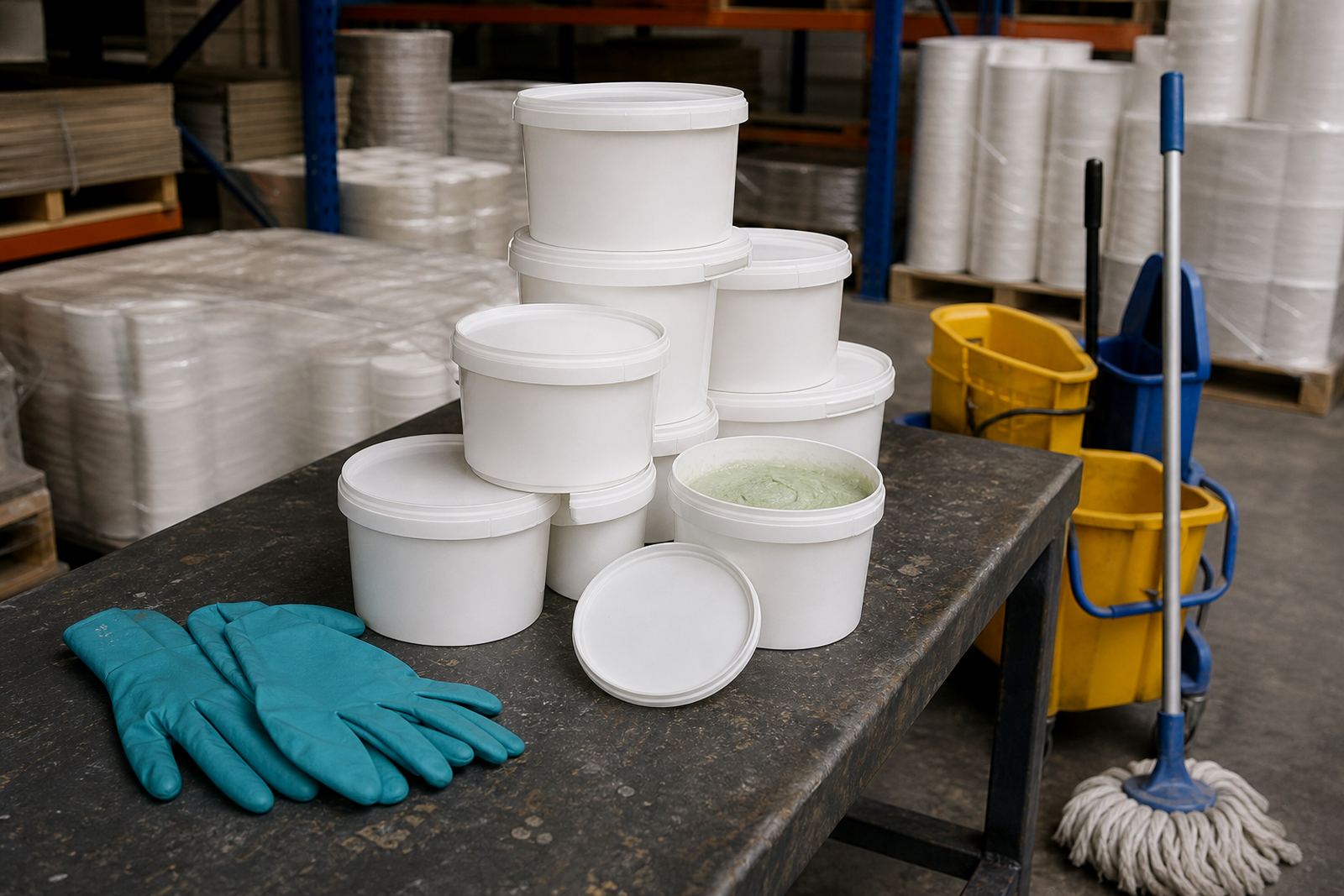
Cleaning pastes are harder on packaging than many people expect. The fill is dense, it can cling to the inside wall, and it often leaves residue around the neck or sealing edge. Once a pack is handled in-store, stacked in a storeroom, or sent through a warehouse, the tub has to keep its shape and hold the lid firmly in place.
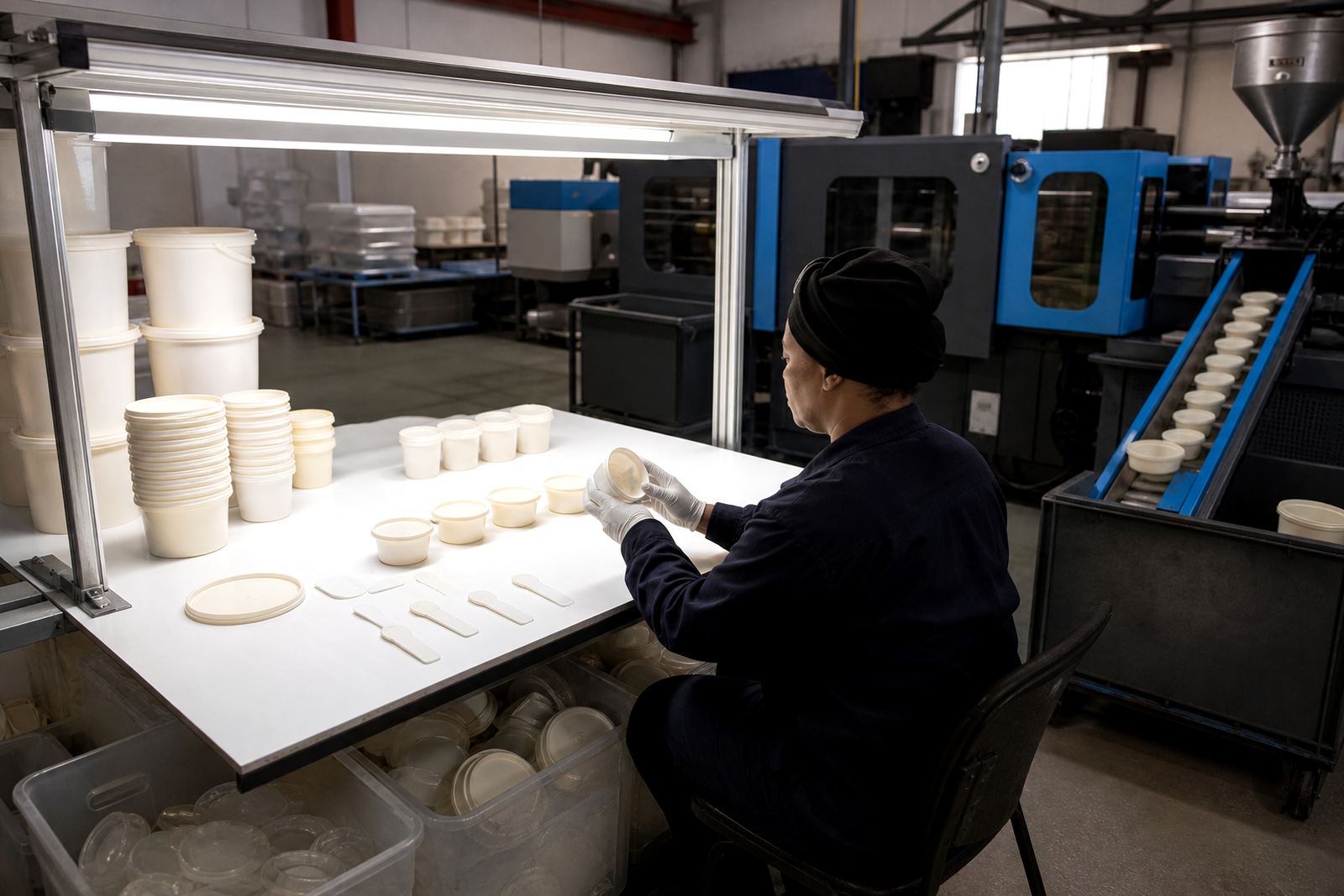
For this use, packers usually look at injection-moulded tubs in polypropylene or HDPE. These materials suit heavy-duty paste products because they stay workable in regular packing conditions and can be made in a range of sizes, from small household packs to larger trade tubs. Clear or natural finishes are less common for this use, so colour matching is often part of the brief, especially when a cleaning range needs a strong shelf presence.
In a lot of jobs the container is only part of the story. The pack also has to sit neatly on a filling line, accept a lid without distortion, and keep tamper protection in place when the product is moved between pallets, depots and shops.
Typical packing set for paste fillers
A cleaning paste pack is usually built around a few basic parts that need to work together. The tub shape, lid profile and seal line must all match the way the product is filled, closed and stored. A container that looks fine on its own can still cause trouble if the shoulder is too narrow or the lid needs too much force on the line.
- Injection-moulded tub in polypropylene or HDPE
- Snap-fit or press-fit lid
- Tamper seal or tear band where the product needs visible protection
- Label area that allows neat print or wrap application
- Stackable base and lid profile for warehouse handling
- Pack size matched to household, trade or bulk use
For products with thick paste or scrub material, a wider mouth often helps with filling and later use by the customer. A narrower opening can work too, but then the lid seal and residue control need more attention. The packing line, filling head and closing method should all be checked against the chosen tub before the run is committed.
Layout choices that save trouble on the line
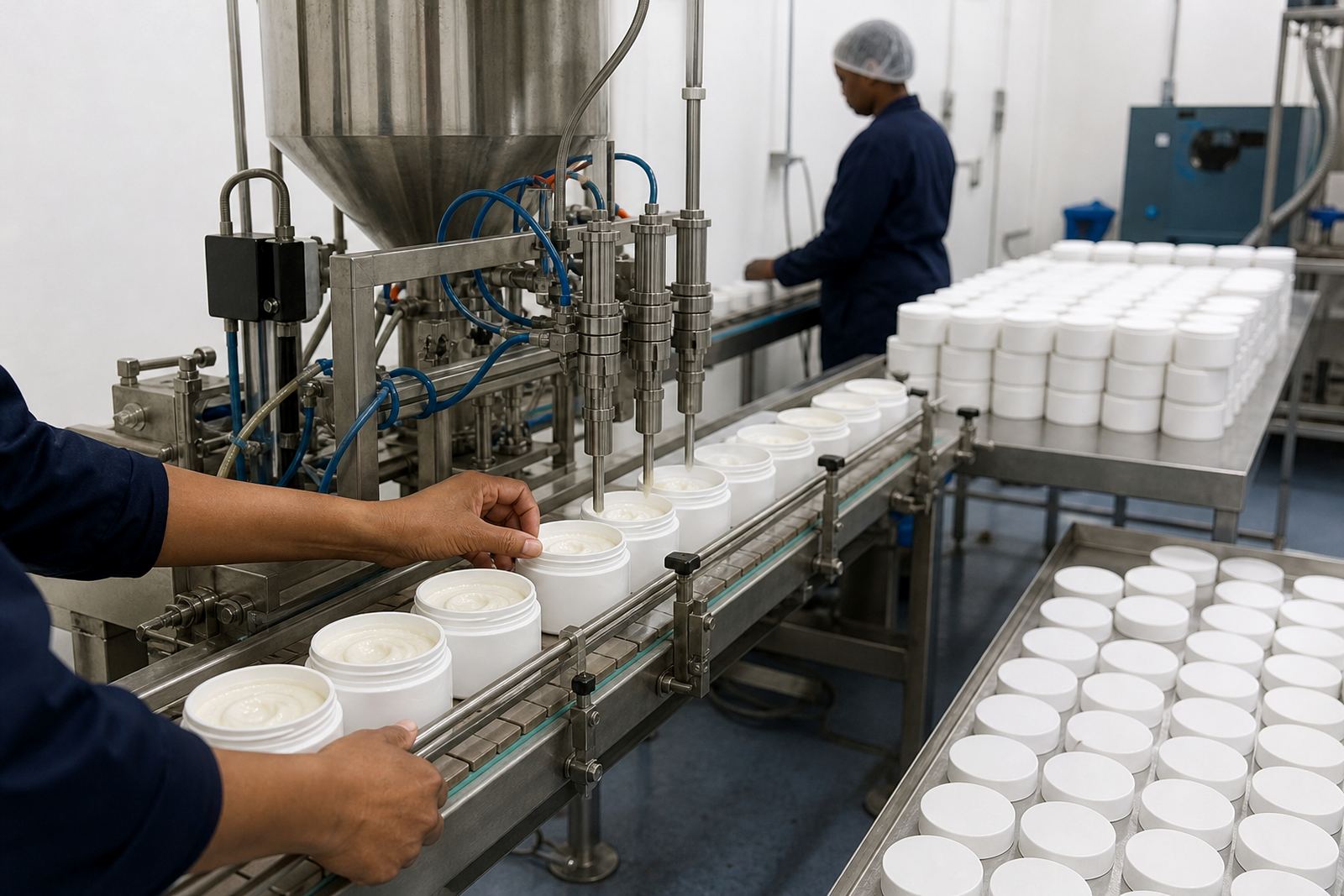
Line fit is usually where the right pack earns its keep. If a lid sits too tightly, the operator spends extra time closing it and the rim can distort. If it sits too loosely, seal integrity becomes a problem and the pack may not move cleanly through secondary packing or dispatch. The best outcome is a tub that matches the fill weight, the handling route and the final shelf display.
For cleaning paste packs, planning usually starts with the fill size and the product texture. Thick pastes with coarse particles can demand a broader opening and a sturdier wall profile. If the product is heavy for its volume, the base needs enough stability so the tub does not rock on a conveyor or during pallet stacking. In humid coastal towns like Durban, lid engagement and storage conditions matter even more because cardboard outer packs and wrapped pallets can shift when the air is damp.
Material selection also matters when the pack is likely to sit in a storeroom or on a retail shelf for a long period. Polypropylene is often used where shape retention and closure performance are important, while HDPE can suit products that need a tougher feel and good chemical resistance. The final call depends on the paste, the closing method and the way the pack will be sold.
Errors that show up after the first production run
Most packaging faults on cleaning paste packs come from small planning gaps rather than from the tub itself. A good mould can still cause headaches if the filling line was not measured properly or the lid was chosen before the neck finish was finalised.
- Choosing a lid before confirming the rim profile
- Using a pack size that is awkward for the fill weight
- Ignoring how residue sits around the sealing edge
- Picking a wall thickness that feels light in hand and flexes too much
- Leaving no space for batch coding or label placement
- Skipping trial production runs on the actual line
Tamper protection is another area where shortcuts create problems. If the seal is too loose, it looks careless. If it is too tight, staff on the line waste time and the product can be hard for customers to open. For household maintenance products, the pack has to feel practical in use, not just strong in transit.
Planning runs for Johannesburg and the coastal metros
Plastic Factory works from Alrode in Alberton and supplies packers across South Africa, including Johannesburg, Durban, Cape Town, Pretoria and Port Elizabeth. Some customers need stock for regular repacking. Others need a new format for a product line that is moving from pails to smaller tubs. In both cases, the early planning usually covers pack size, colour, lid style and the likely order pattern.
Alberton, Germiston and Boksburg often need practical stock planning for repeat filling. In Johannesburg, a cleaner or paste maker may want shorter storage times and easier line handling. In Cape Town and Port Elizabeth, moisture in the air and the movement of goods through depots can affect how the outer packs are managed. Pretoria and Durban often bring their own distribution patterns, especially where goods move between trade counters, warehouses and retail shelves.
For product development, the team may work through mould development, lid development, tamper seal design, trial production runs, pack size planning, line fit checks and ongoing product updates. That gives packers room to test the pack before committing to a full production run.
Budget ranges in rand for cleaning paste tubs
The budget for a cleaning paste pack depends on how much custom work is needed. A standard off-the-shelf style tub sits at the lower end, while a new mould, a custom lid or a special tamper feature adds cost. Trial production also affects the total, especially where several rounds of fit testing are needed before the final pack is approved.
For many jobs, the cost is shaped by wall thickness, tooling complexity, pack size, colour work and the number of components in the closure system. Smaller household tubs generally use less material, while larger trade packs need stronger walls and more careful moulding. Secondary packing advice may also matter when cartons, sleeves or outer wrapping are part of the final supply.
As a broad guide, cleaning paste packs can range from a few thousand rand for simpler development or run planning, through to higher project values where new tooling and custom closures are required. The exact figure depends on the specification, order quantity and how much testing the line needs before full production starts.