Rectangular tubs that sit well on chilled shelves
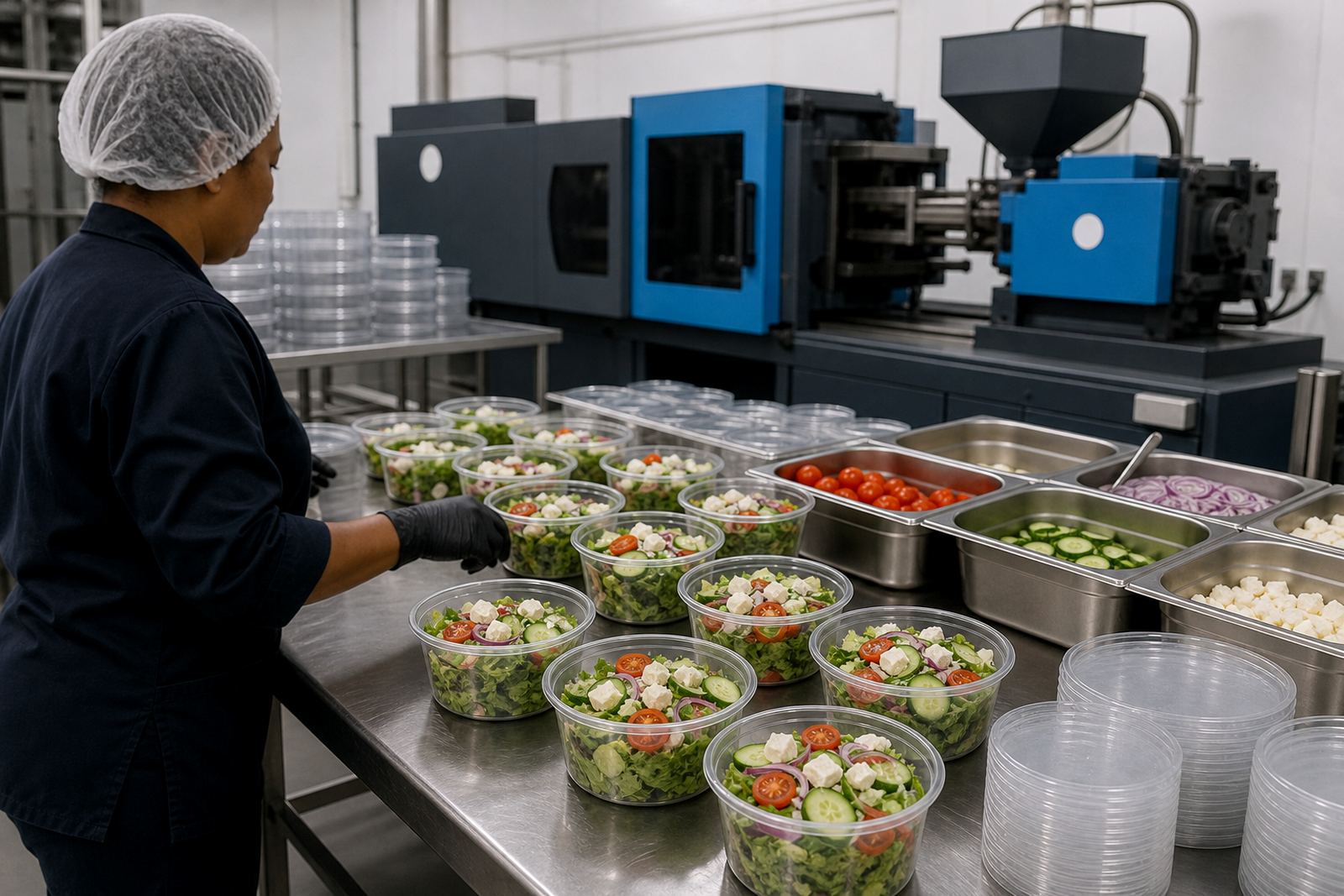
Prepared salads move through busy packing lines, then into chilled display cabinets and delivery crates. Rectangular and square tubs make better use of shelf space than round packs, and they help packers hold a cleaner front face on the retail shelf. For deli salads, coleslaws, pasta blends and fresh side dishes, the container shape matters as much as the salad itself.
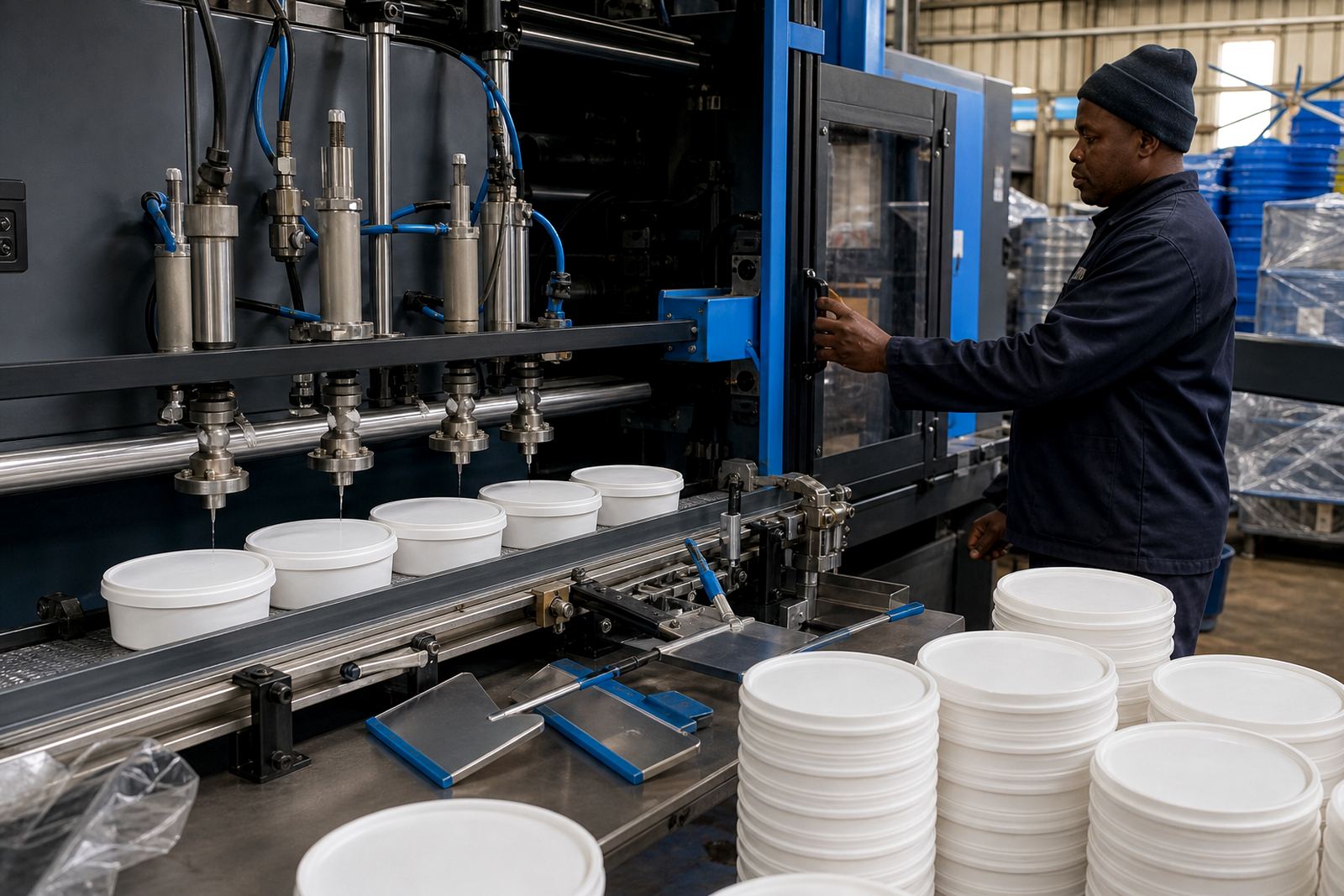
Injection-moulded polypropylene tubs are often used for everyday food packing because they are light, consistent in size and easy to stack. HDPE containers are also used where a tougher side wall is preferred. The right choice depends on fill weight, handling on the line and how the pack will travel through the cold chain from Alberton to Durban or Cape Town.
Pack sizes that match real kitchen output
A prepared salad line usually works best when pack sizes follow the kitchen batch, not the other way round. If the range includes 250 ml, 375 ml and 500 ml salads, the tubs need matching footprints so the packing team can move between sizes without awkward changeovers. A square 375 ml tub can suit a compact coleslaw, while a deeper rectangular tub may be better for layered salads with dressing at the base.
- Small single-serve tubs for lunch counters and grab-and-go coolers.
- Medium tubs for family packs, side dishes and mixed salad ranges.
- Larger tubs for bulk deli trays and foodservice packs.
- Lid heights that allow a neat seal without crushing toppings.
Line fit checks help confirm whether the tub sits properly under the filler, whether the lid closes cleanly, and whether the finished pack stacks without leaning. A pack that looks fine on paper can cause trouble once it reaches the actual filling line.
Materials, lids and seals for chilled food lines
Food-safe materials are central to this category because prepared salads often carry moisture, dressing and cold storage demands. Polypropylene suits many salad packs because it handles a wide range of food types and gives a clean finish. HDPE can be useful where extra toughness is needed during transit or in repeated handling. The lid choice should match the tub rim profile closely, otherwise the seal can feel loose or uneven.
Tamper seals and tear features matter for retail confidence and for distribution into supermarkets, forecourts and independent deli counters. Some clients need simple snap-fit lids for back-of-house use, while others need visible evidence that the pack has not been opened. Where fresh produce is packed in hot weather, the closure also needs to cope with condensation and slight pressure changes in the pack.
How the line behaves in Alberton and beyond
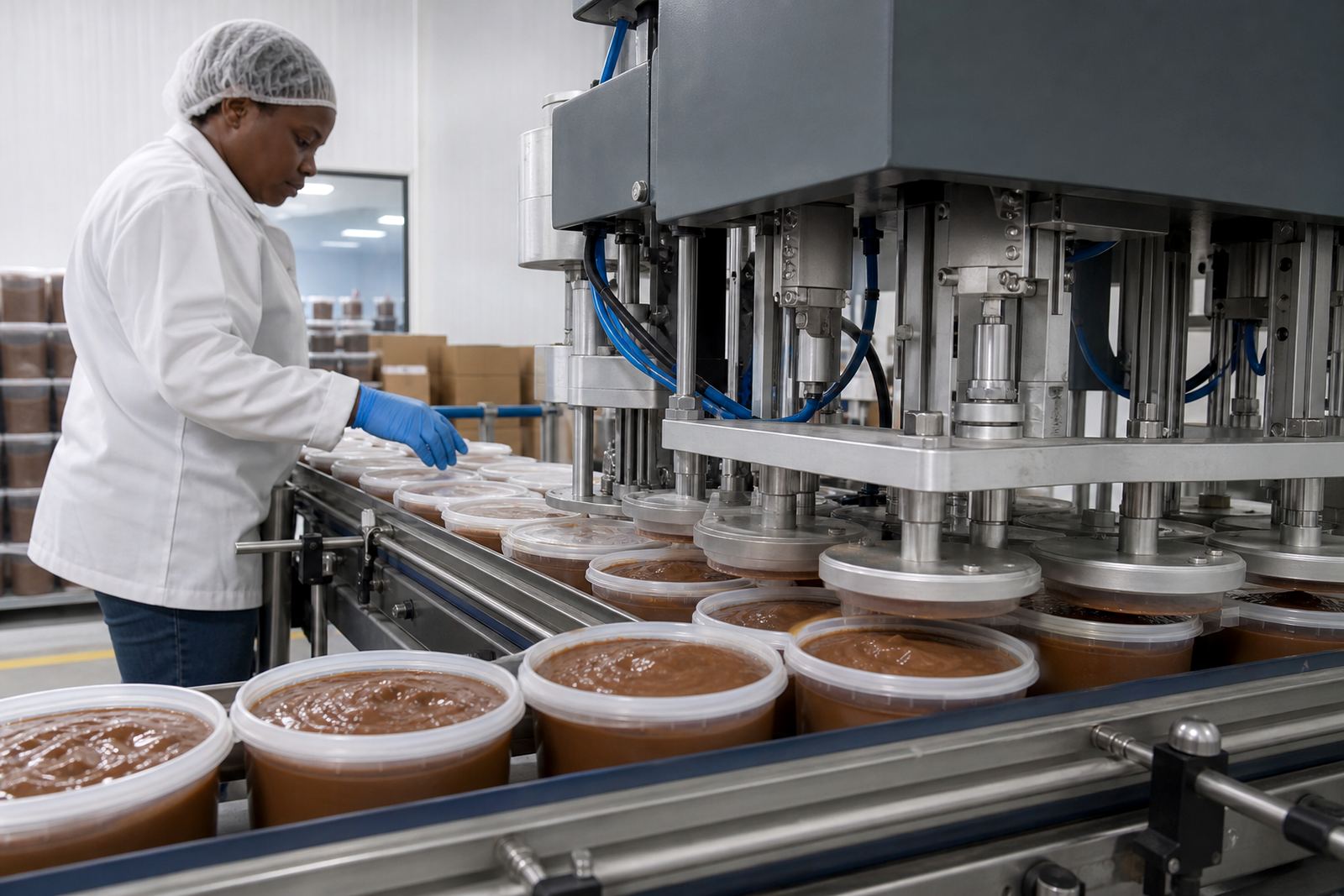
In Alrode and the surrounding industrial areas, prepared salad packers often work with a mix of manual filling, weighing and sealing. The layout should keep the tubs close to the filler and keep the lids within easy reach, so the line does not waste motion. Straight runs are usually better than tight corners, especially where staff are wearing gloves and handling wet product.
For larger plants serving Johannesburg, Pretoria, Durban, Cape Town and Port Elizabeth, stock run planning becomes important. A calm line needs enough tubs and lids in the right sizes, with a sensible balance between daily use and storage space. Secondary packing also matters because outer cartons must protect the finished packs from crush and movement during delivery.
- Keep the lid feed near the filling point.
- Allow enough table space for weighing and portion checks.
- Stack finished cartons so the top layer does not bow.
- Separate salad packs from dry goods in dispatch areas.
Common mistakes that raise spoilage or waste
One common mistake is choosing a tub that looks attractive but leaves too much headspace. That can let the salad move around, which is not ideal for mixed leaves, grated vegetables or dressed coleslaw. Another issue is selecting a lid that does not seat evenly, which can lead to drips in transit and messy trays on arrival.
Packers also run into trouble when they mix too many sizes across the range. Too many container footprints slow the line and create confusion in dispatch. If the range grows from three salad sizes to six without a proper plan, the packing team starts mixing lids, cartons and labels, and waste climbs quickly. A little planning upfront usually avoids a lot of rework later.
Budget ranges that suit salad packing runs
Budgets for prepared salad packaging depend on size, material, lid style and whether a new mould is needed. Standard tubs and lids for established pack sizes generally sit in a lower cost bracket than custom shapes with special wall depths or matching tamper features. For many local food packers, the first question is whether the existing range can be adjusted before new tooling is committed.
As a working guide, simple pack changes and material selection discussions may sit in the low thousands of Rand, while trial production runs and line fit checks can move into a more involved project budget. New mould development usually costs more because it includes tooling design, trial work and adjustments before production is settled. For a salad line that needs custom sizes or lid profiles, it is sensible to plan a staged budget rather than one large jump.
- Standard tub and lid ranges: lower budget pressure.
- Custom sizes or colour matching: moderate budget impact.
- New mould development and trial runs: higher project cost.
- Bulk stock planning: useful for steady monthly output.
Alberton packers serving retail chains and foodservice buyers often want repeatable pack quality, not just a low unit price. A tub that stacks properly and seals cleanly can reduce waste, improve shelf presentation and make dispatch easier to manage.
A salad pack line that stays orderly from fill to shelf
Prepared salads need packaging that supports speed, clean handling and consistent shelf presentation. Plastic Factory works with food, pharmaceutical and cosmetic packers, so the same care around material selection and line fit carries through to the salad category too. For rectangular and square tubs, the real test is not only how they look, but how they behave on the line, in the cold room and in the carton.
Where a range is still being shaped, small trial runs help show whether the pack suits the product mix, the fill weight and the retail journey. That is often the point where a salad line becomes easier to run, because the container choice matches the actual packing method instead of forcing the team to work around a poor fit.