Wide-mouth tubs for thick, spoonable products
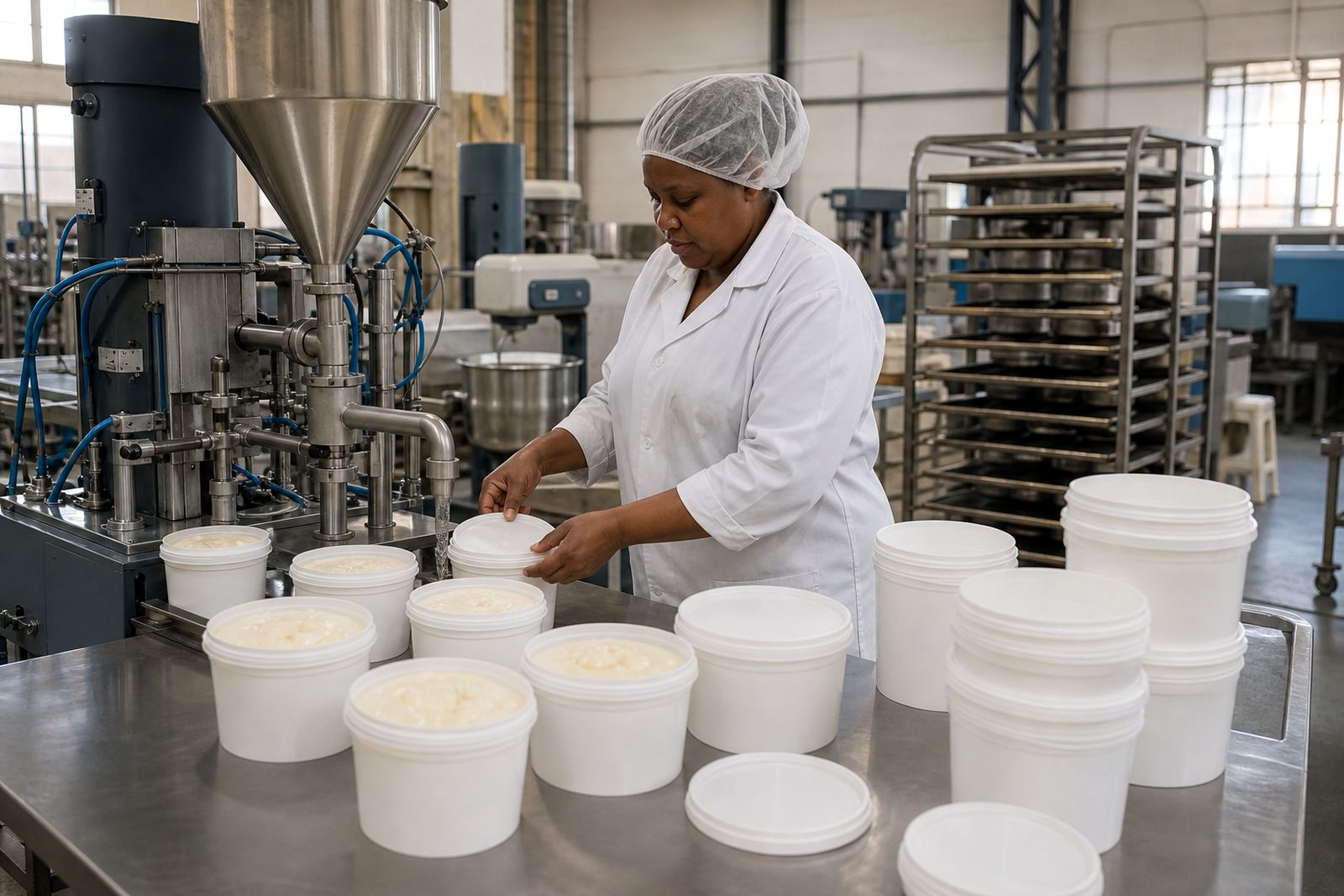
Spreads and dips need packaging that handles a thicker fill without messy edges or awkward transfer. A wide-mouth tub gives space for filling heads, spatulas and scoops, and it also helps the customer get the last portion out without fighting the rim. For hummus-style products, cream cheese spreads, savoury dips and sweet spreads, the opening must be wide enough for practical use yet still tight enough for neat storage after opening.
Injection-moulded tubs are a sensible fit for this kind of product because the wall finish, rim detail and lid seat can be kept consistent from one run to the next. Polypropylene is often used for food pack formats that need a light but firm body, while HDPE is useful where impact resistance and handling strength are priorities. In both cases, the choice depends on fill weight, shelf handling and the look the pack needs on retail shelves or through food service channels.
The container set that usually works on packing lines
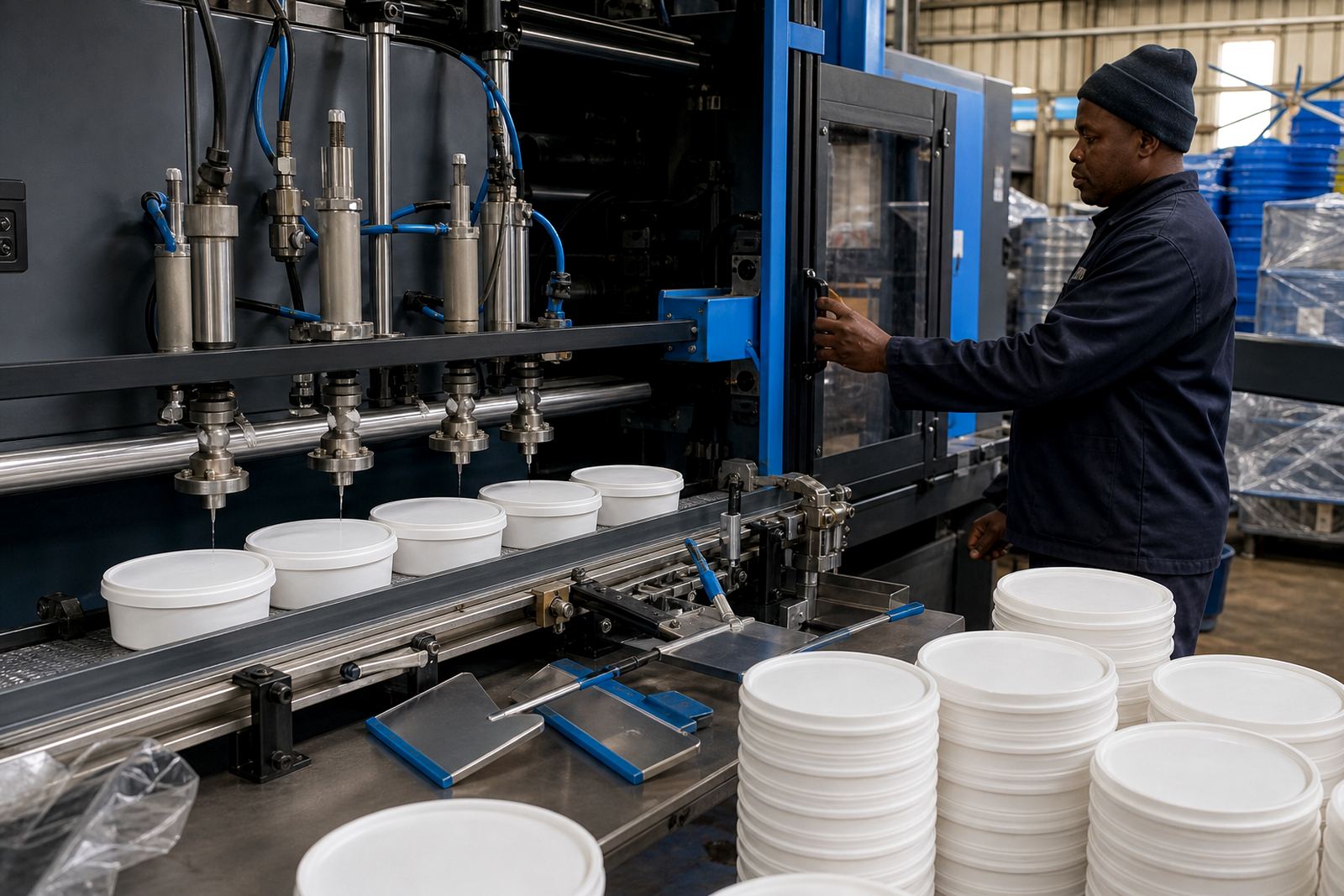
A spreads and dips pack is usually more than just a tub. The full set often includes the tub, a matching lid, and where needed a tamper evident seal or band. Some products also need a liner style seal or a lid form that supports repeated opening and closing without stressing the rim. The pack has to work with the product viscosity, the filling temperature and the way staff close the pack on the line.
- Wide-mouth round tubs for direct filling and easy scooping
- Matching lids that sit evenly around the rim
- Tamper seals where the retail pack needs a clear first-open signal
- Sizes suited to individual portions, family packs or food service tubs
- Body and lid colours that suit branding without making filling checks difficult
On packed products with oil, moisture or coarse ingredients, the lid fit must stay steady even when the pack is handled in cold rooms or during transport around Johannesburg, Durban, Cape Town, Pretoria and Port Elizabeth. A loose lid wastes product and creates trouble later, while a tight, even fit helps the shelf pack stay neat.
Layout notes for food, pharma and cosmetic packers
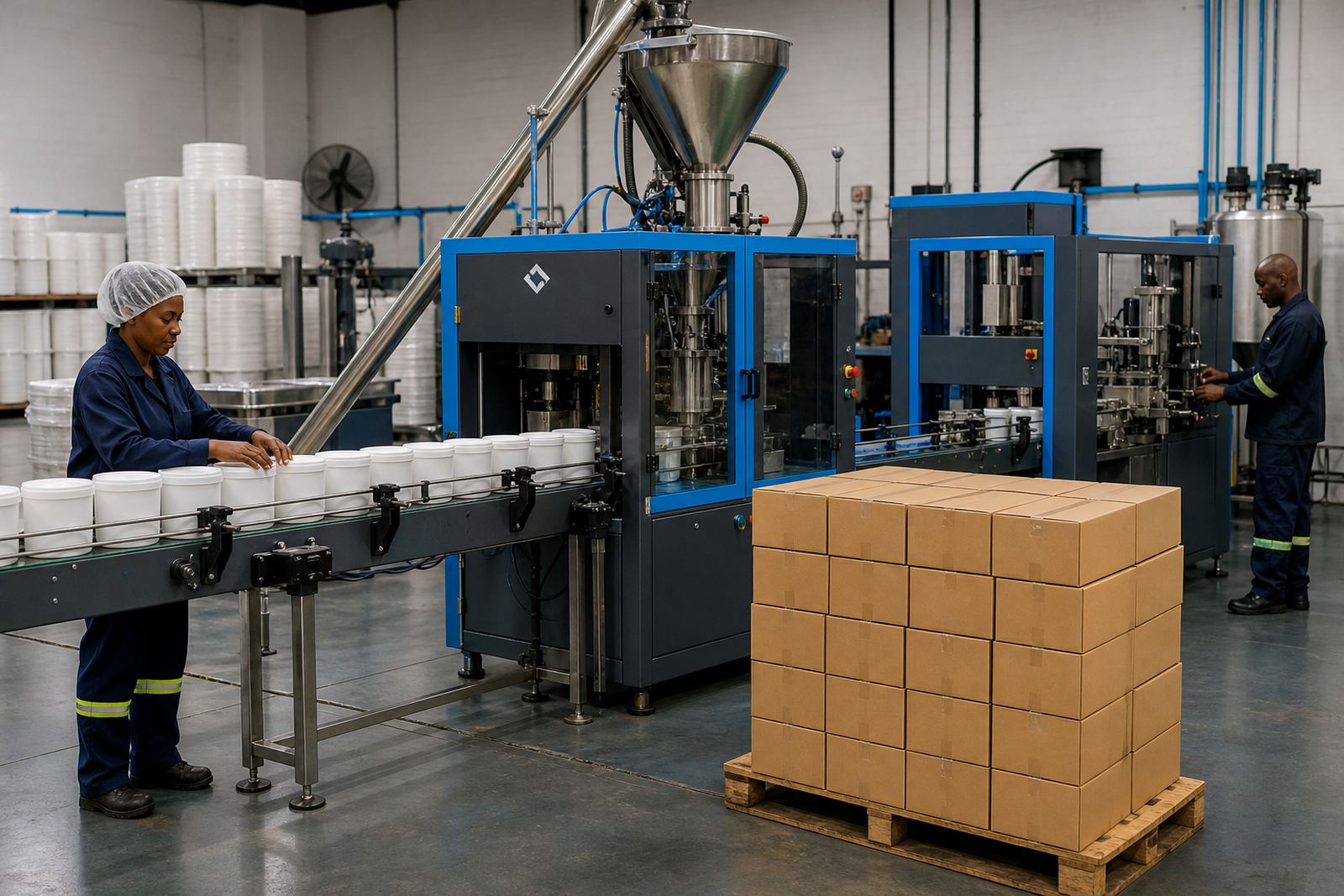
For food packers, the main questions are fill consistency, seal integrity and how easy the pack is to close without slowing the line. In a compact plant the tub size should match the filling machine stroke and the operator handling flow, otherwise product ends up on the rim and lids sit crooked. If the product is oily or has visible pieces, the rim shape matters even more because residue can interfere with sealing.
Pharmaceutical and cosmetic packers often need cleaner pack presentation and tighter control over appearance. That does not mean the same tub suits every product. A balm, scrub or ointment may need a different wall thickness or lid profile than a food dip, even when the volumes are similar. Colour matching can also matter for brand separation, especially when one pack size must work across more than one product range.
When planning a run, it helps to consider how the pack behaves after filling, during capping and in secondary packing. If boxes are tight or shrink wrap is used, the tub profile should stack neatly and not waste carton space. In some plants the real issue is not the moulded pack itself but the fit between the pack, the carton and the pallet layer.
Common mistakes that cause waste on spreads and dips runs
One common mistake is choosing a tub that looks right on paper but is awkward on the line. A narrow rim can make filling slower, while a very shallow tub may splash during dosing. Another problem is matching the wrong lid to the container finish, which can lead to uneven closure and poor shelf presentation. Small details matter, because the pack has to survive filling, sealing, transport and handling in stores or depots.
- Picking a size that leaves too little headspace for the product
- Overlooking the effect of cold storage on lid seating
- Using a tub shape that does not stack cleanly in cartons
- Choosing colours that hide fill levels during checks
- Skipping a trial run before committing to a full stock order
Trial production runs are useful where the product has chunks, air content or an uneven surface after filling. A pack can look fine in a sample but behave differently on a live packing line. The best results usually come from checking the pack with the real product, the real lid and the actual line routine.
Planning the right pack size and stock mix
Pack size planning starts with the market the product is aimed at. A small retail dip, a family tub and a food service pack all need different handling. The same product may also need more than one format if it is sold through grocers, butcheries, deli counters or contract pack channels. That is where stock run planning helps, because it reduces the chance of holding the wrong mix of tubs and lids in the wrong quantities.
For many spreads and dips products, the practical budget usually moves in bands rather than one fixed figure. Smaller trial quantities often suit brands testing a new line, while larger moulded runs are better for repeat packers with steady demand. As a working guide, simple container and lid formats may start from a few thousand Rand for a test order, while a more developed pack with matching lid detail, tamper seal parts and product-specific adjustments can sit in the higher tens of thousands, depending on volume and tooling needs. Exact figures depend on the size, mould complexity and how much custom work is needed.
Alrode, Alberton is a practical base for serving Gauteng packers and dispatching to coastal and inland customers alike. The aim is to keep the pack suited to production realities, not just shelf appearance, so the final choice works on the line and in the carton. A proper pack fit can save more than a decorative tweak ever will.
Support for new formats and product updates
Some spreads and dips products stay stable for years, while others change because the fill weight shifts, the recipe changes or a new market needs a different size. That is where ongoing product updates help. A pack may need a revised lid profile, a deeper tub, a new seal approach or a colour change when the product line grows. Material selection matters too, especially where a product needs good resistance to handling, moisture or the conditions around refrigerated storage.
Plastic Factory works with food, pharmaceutical and cosmetic packers that need practical tub solutions rather than loose ideas. The enquiry form on the contact page is used for line fit checks, custom tub design, lid development, tamper seal design and related pack planning. For spreads and dips, the right combination is usually plain and direct: a wide-mouth tub, a dependable lid, a seal that makes sense for the channel, and a size that keeps the packer moving without waste.