Dairy Packs That Need To Sit Flat In Cold Rooms
Yoghurt, maas, cultured milk and dessert ranges all place different demands on the pack. Some lines want a round tub that pours cleanly and nests well, while others need a square container that uses shelf space better in mixed cartons. The shape, wall thickness and lid fit all matter when the product is filling at speed and moving through cold stores, wholesalers and retail depots.
For dairy packers in Johannesburg, Durban, Cape Town, Pretoria and Port Elizabeth, the pack has to work in more than one setting. It must handle chilled storage, transport vibration and repeated handling without lid lift or base distortion. A tub that looks fine on the moulding table can still give trouble if the rim profile is loose or the pack size does not suit the line. That is where the mould, the resin choice and the filling format need to line up properly.
Typical Tub And Lid Setups For Yoghurt Lines
The most common sets are round tubs for spoonable yoghurt and square tubs for portioned dairy products that need tidy crate loading. Injection moulding gives repeatable walls, sharp rim detail and a consistent finish from one production run to the next. Polypropylene is widely used for many chilled food packs because it is light, stable and suits heat sealing and lid engagement. HDPE is also used on some ranges where toughness and squeeze resistance are important.
Depending on the fill format, packers may need matching lids, tamper evident features and a container that works with their secondary packing. A good set also needs sensible nesting, so empty tubs do not take up more room than necessary in storage. If the line fills by hand, the rim must be easy to seat. If the line runs faster, the lid geometry and panel strength need closer attention.
- Round yoghurt tubs for spoonable products and family sizes
- Square tubs for shelf-efficient chilled dairy packs
- Lids with firm seating for fridge and transport movement
- Tamper seals where the pack format calls for visible security
- Material options suited to food-contact packaging use
Planning The Pack Around Your Filling Line
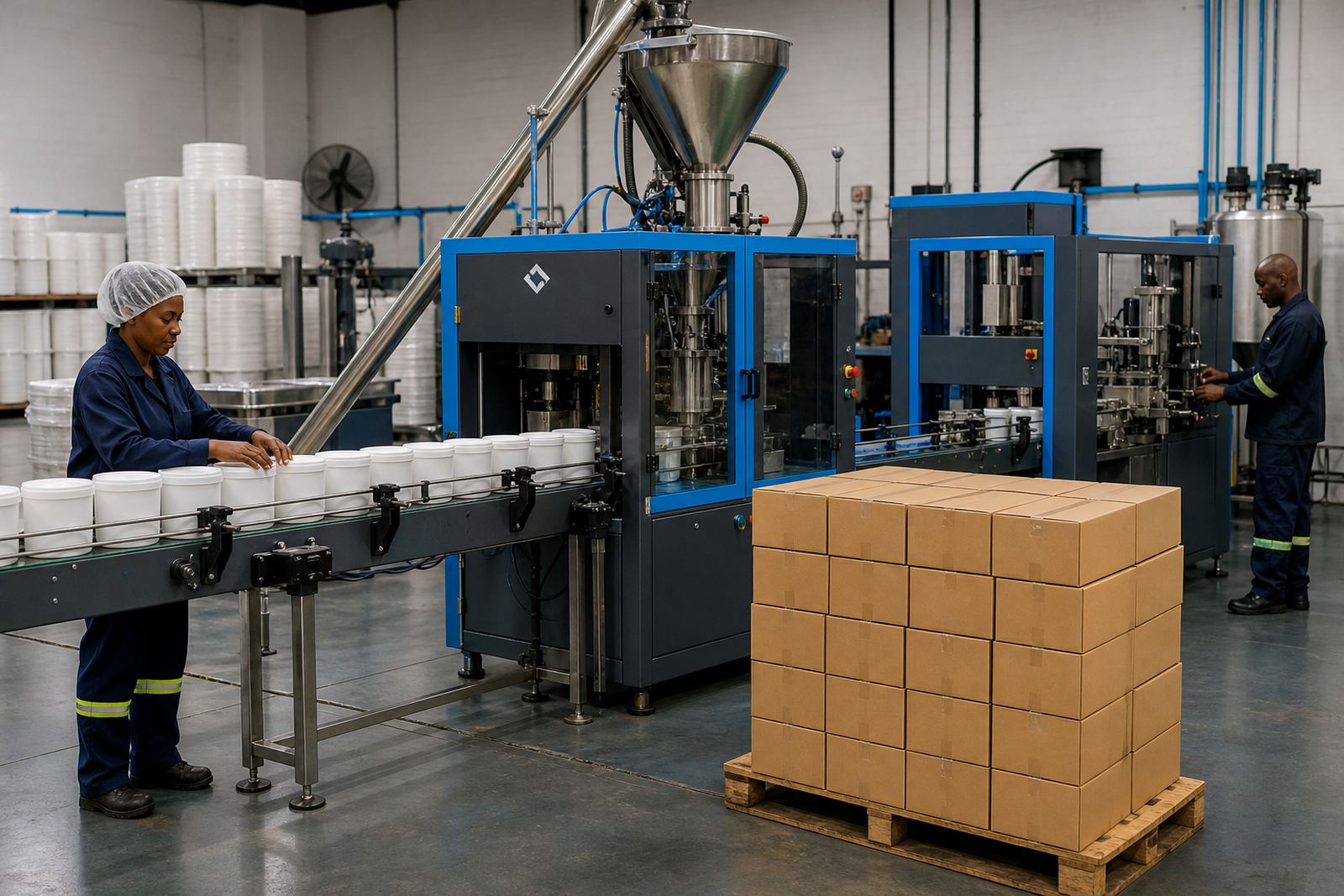
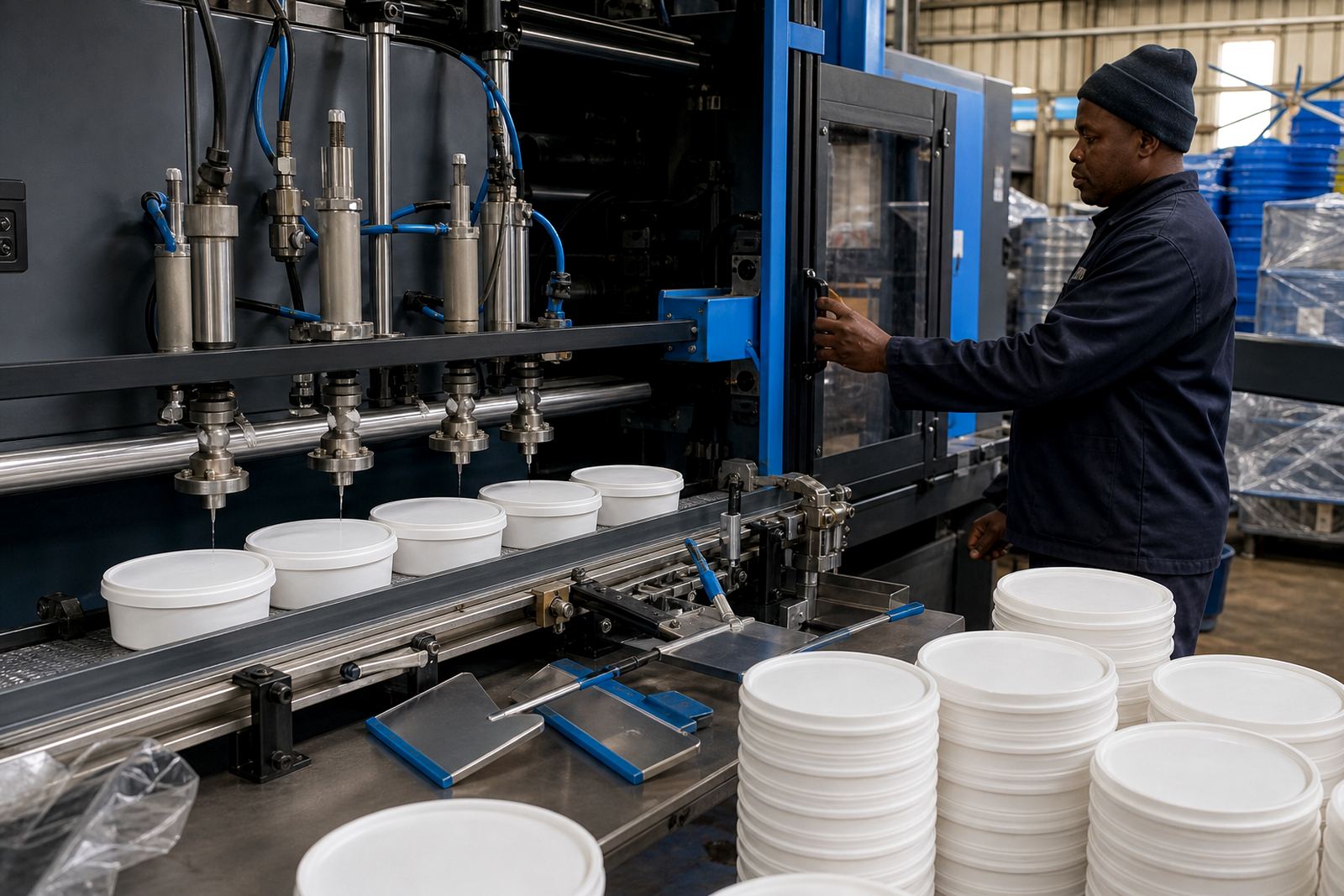
The container should be matched to the filling method, not only the final product size. A line that fills at speed may need slightly different rim tolerances from a slower hand-fill setup. If you are working with a cup denester, conveyor or heat seal station, the base profile and flange width must suit the equipment. The pack also needs to behave properly in cold rooms, because dairy goods are often packed, stored and dispatched under refrigeration.
Line fit checks help to pick up small issues before a full production run. These checks often focus on stack height, lid closure, label panel space and how the tub settles into cartons or crates. Pack size planning matters too, especially where the product is sold in several formats, such as single serve tubs and larger family packs. A small mismatch in diameter or height can upset tray counts and pallet layout, and that gets expensive very fast.
- Check whether the tub nests or stacks as intended
- Confirm the lid seat on the actual filling setup
- Allow space for labels, date code marks and handling
- Plan carton counts before the mould size is fixed
- Consider how the pack sits in cold-chain distribution
Material Choices For Food, Cultured Dairy And Chilled Storage
For dairy packs, material selection is not a theory exercise. Polypropylene and HDPE behave differently in moulding, flex and finish, so the product and line should guide the choice. Polypropylene is often preferred where stiffness and a cleaner formed rim are important. HDPE brings its own handling benefits and can suit packs that need a bit more give. The wall design needs to be set with the resin in mind, otherwise the tub can warp or feel uneven in the hand.
Food-safe packaging also asks for clean production discipline, controlled colour matching and careful handling of lids and seals. White, translucent and natural finishes are common, while branded colour tones can be explored when the pack range needs visual separation on shelf. For cultured dairy, the inside surface should release cleanly and the rim should remain even after moulding. A rough edge or poor closure line is enough to spoil the pack, even if the body looks acceptable.
Common Mistakes That Make Dairy Packs Harder To Run
One mistake is choosing a tub that looks good on paper but sits badly on the filling line. Another is pushing for a very thin wall where the product needs more structure. In chilled dairy, a weak rim or shallow lid engagement can lead to lifting in transport, and then the whole pallet needs attention. Tubs that are too tall for the shelf plan can also create waste in carton space and dispatch stacking.
Problems often show up in the details: a lid that is hard to seat, a tamper seal that tears unevenly, or a pack that rocks inside the tray. Poor colour matching can also create unwanted variation between runs, especially when the same range is packed over time. These issues are usually easier to correct at the mould and trial stage than after stock has been produced and lined up for dispatch. It is better to settle the dimensions early, even if that means a few small changes in the first samples.
- Do not choose diameter before checking carton layout
- Do not ignore how the rim behaves under chilled handling
- Do not leave lid testing until full stock is ready
- Do not let label space be squeezed out by decoration
- Do not overlook pallet height when pack sizes change
Budget Ranges For Dairy Container Projects In Rand
The budget depends on container size, lid type, mould complexity and whether the project needs new tooling. Small changes to an existing format are usually different from a full custom tub and lid set. Trial production runs, mould development and colour guidance also affect the figure. For dairy packers, the cost picture should include the whole run, not only the unit container, because fit and packing efficiency can change the total spend on the line.
As a working guide, simple product adjustments and line-fit checks may sit in the low thousands of Rand. New custom tub and lid development is often a larger project that moves into the mid-thousands or higher, depending on tooling detail and pack size. If a tamper seal system or several size variants are added, the project can move up further. It is wise to budget for sampling, trial runs and any secondary packing changes at the same time, because those parts shape the final result just as much as the mould itself.
What Dairy Packers Usually Send Through For A Quote
For yoghurt and dairy work, the best starting point is a clear picture of the product, the fill weight and the packing line. That usually includes the desired container shape, the size range, the lid style and whether tamper evidence is needed. If there is a current pack already in use, its dimensions help a great deal. Even a rough sketch or a sample tub can point the mould work in the right direction.
The other useful detail is how the packs travel after filling. Some lines go straight into cartons, some into crates, and some into mixed chilled distribution. That affects pack height, stack stability and label space. The dairy sector can be unforgiving when a container is a millimetre off, so the planning stage matters. A tidy pack that runs smoothly on the line saves time in the cold room and reduces waste where every box counts.
- Product type and fill weight
- Preferred round or square tub format
- Lid and tamper seal requirements
- Expected carton or crate layout
- Any sample pack or dimension notes available