Packs that suit tablets, powders and related fills
Non-sterile pharmaceutical packing calls for tubs that stay neat through filling, sealing, labelling, storage and transport. Tablets, powders, granules and support products all benefit from containers that close consistently and hold their shape in the packing room. For Alrode and other industrial areas around Gauteng, this often means choosing polypropylene or HDPE bodies with lids that match the pack size and the line speed being used.
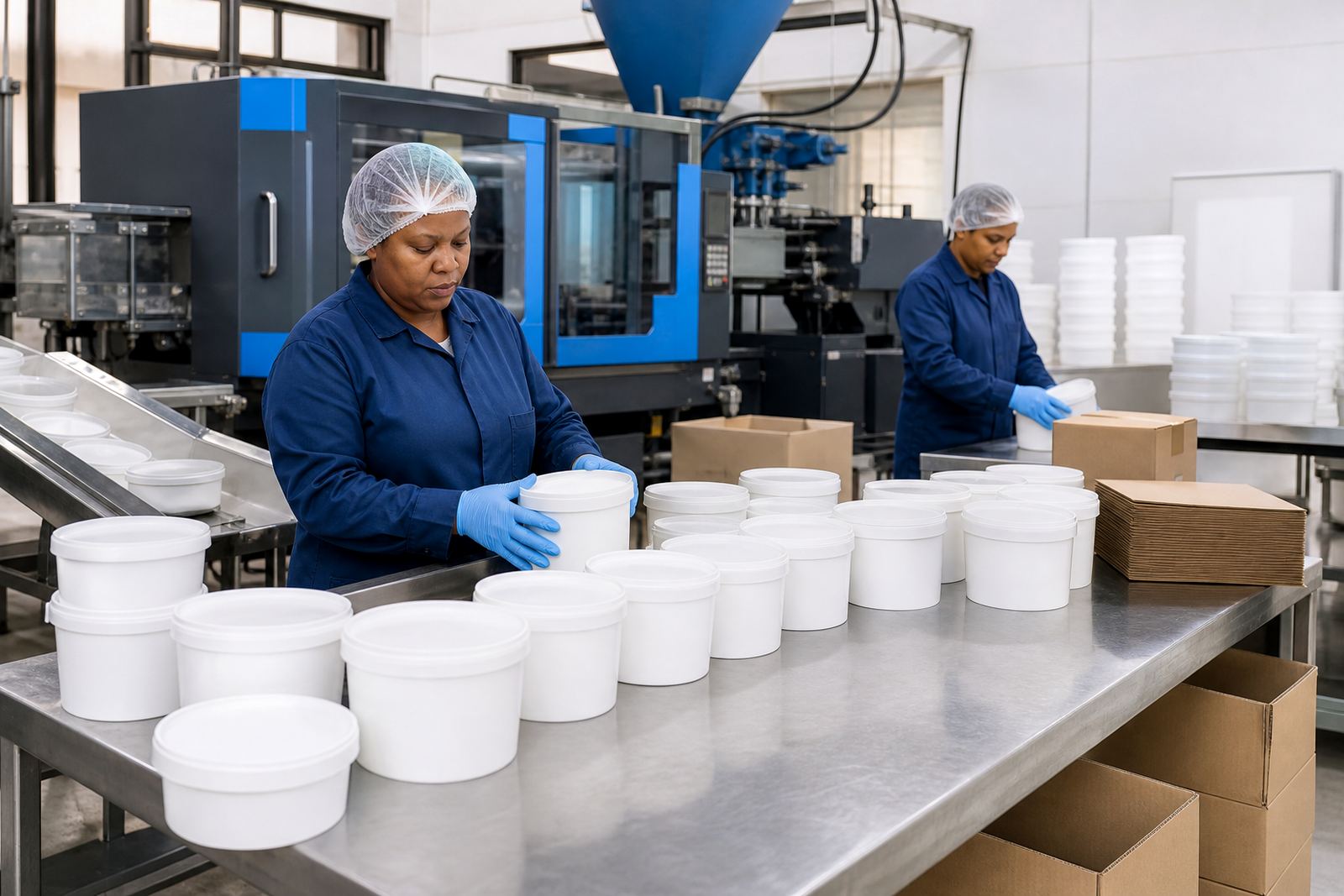
Injection moulding gives a repeatable wall thickness and a clean finish, which matters when packs must stack properly in cartons and on pallets. For tablet packs, the lid fit and rim profile are just as important as the tub itself. A good set-up reduces scuffing, split lids and loose closures that throw off the rest of the shift.
Material choices that match the product and the shelf life
Polypropylene is widely used for lightweight containers and tubs where stiffness, clarity of form and reliable sealing matter. HDPE is often preferred where a tougher feel, a slightly more forgiving body and strong chemical resistance are useful. The right choice depends on the fill, the shelf life, the label area and how the pack will move through the packing line, distribution and store room.
Food-safe materials are often discussed in the same room as pharmaceutical packaging because both need clean, controlled handling. For non-sterile tablet and powder packs, the key issue is practical compatibility with the product and the process. A container that looks good on the shelf but slips on the conveyor is a problem, so the material has to suit the line not just the artwork.
- Polypropylene for lighter tubs and a cleaner moulded finish
- HDPE for stronger handling and more forgiving packs
- Clear lid lines that help operators check closure quickly
- Colours that support product grouping or batch separation
Lids, tamper seals and the working parts of the pack
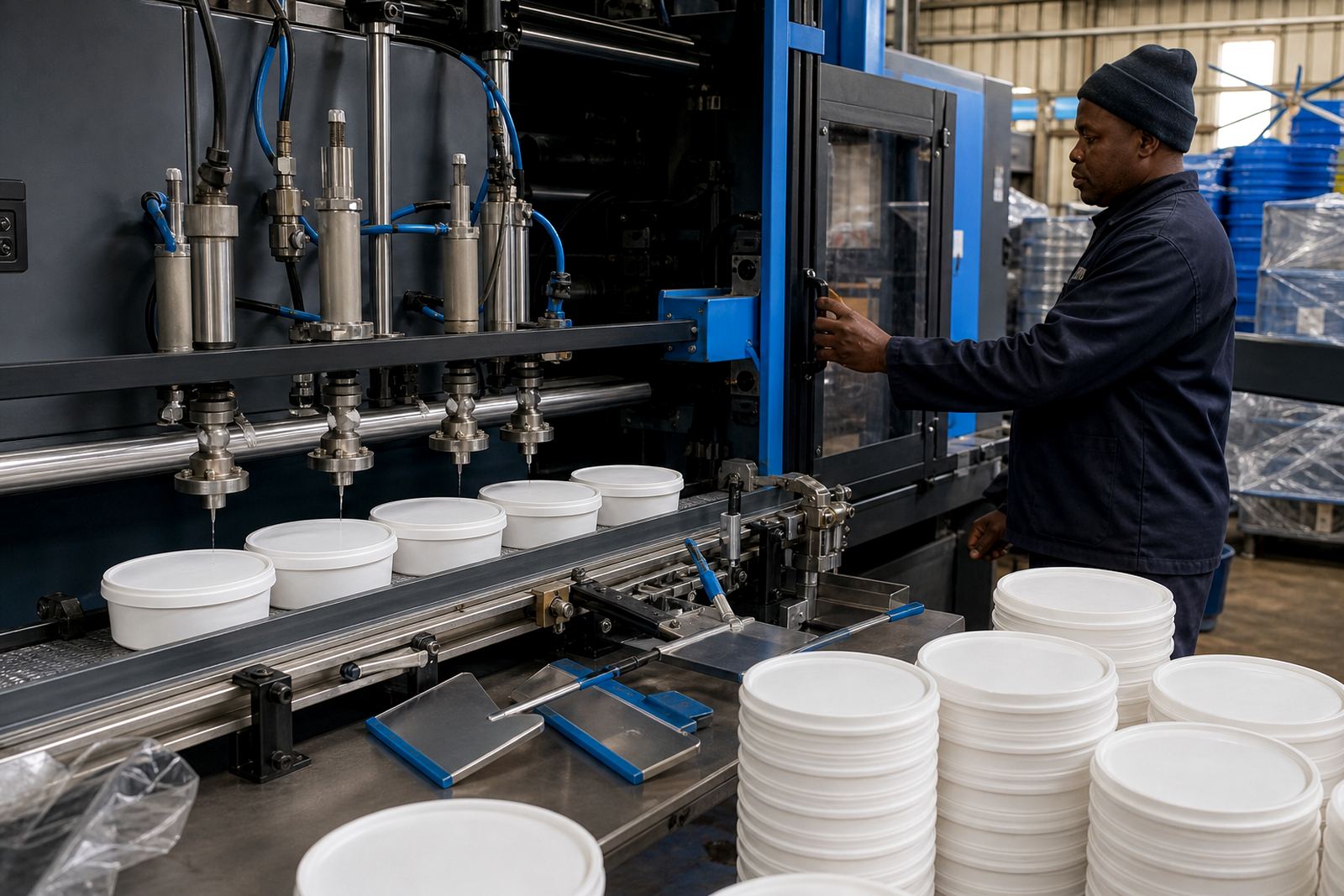
Tablet and powder packs usually need more than a simple body and lid. Tamper seals, tear bands and snap features can help show if a container has been opened, while a stable lid profile helps with carton packing and shelf presentation. On a busy filling line, the pack has to behave the same way every time, or the team ends up spending extra minutes on corrections that should not be there.
Line fit checks matter because the real test happens at the fill point, not in a sample tray. Lid application force, seal alignment and the way the pack sits under a label head all need checking before a run starts. A lid that feels fine in the hand can still ride high on the rim or press unevenly on the contents if the moulding tolerances are off.
- Snap-on lids for fast handling at the filling station
- Tamper seals for a clear opening signal
- Rim and neck detail matched to the closure method
- Label panel space that stays readable after handling
Planning the pack around the packing room
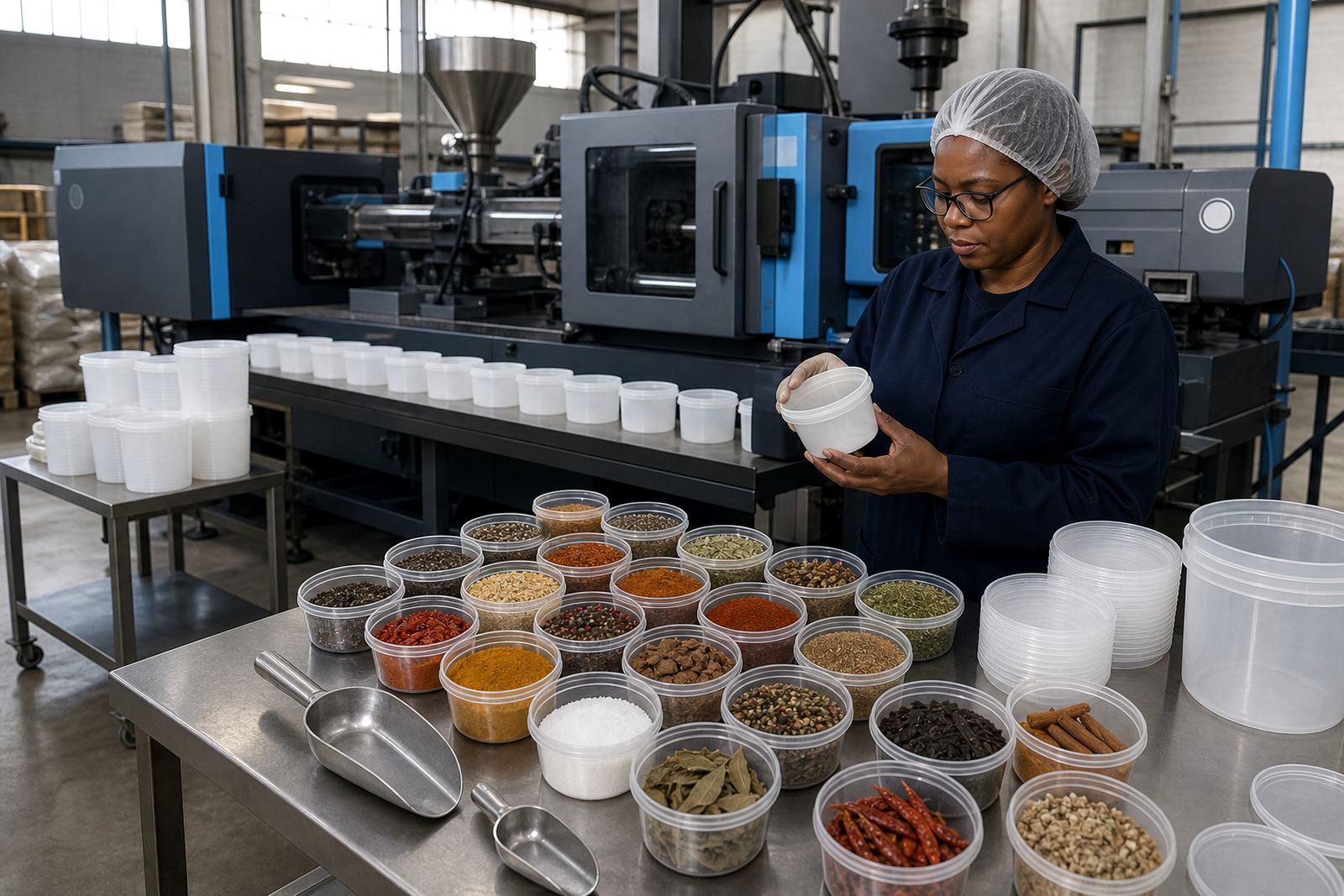
The best pack size is often decided by how the room works, not only by the tablet count or powder mass. Fill volume, headspace, scoop or desiccant placement, carton fit and pallet pattern all need attention early on. In a plant handling multiple SKUs, a shared family of tubs can make stock control easier, provided the lids, heights and colours remain easy to separate on the floor.
Trial production runs are useful when the product line is still being settled. They show whether the chosen tub fills cleanly, whether powder clings to the rim, and whether the lid can be applied without wobble. Secondary packing advice also helps where inner packs are bundled into cartons for dispatch to Johannesburg, Durban, Cape Town, Pretoria or Port Elizabeth. Small issues like carton width or pallet overhang can turn into bigger waste later, so they deserve a proper look at the start.
- Pack size planning around tablets per tub or powder weight
- Line fit checks for capping, labelling and carton loading
- Stock run planning for repeat fills and seasonal demand
- Secondary packing advice for tray, carton or bundle formats
Common mistakes that cost time on the floor
One common mistake is picking a tub by appearance alone. Another is assuming a lid will fit because it closes once by hand. In practice, tolerances, stacking pressure and the speed of the packing line all change how the pack behaves. A container that works well for a slow manual fill may become awkward on a semi-automatic line, especially where several operators handle the same unit during the shift.
Colour matching can also be overlooked. For product families with several strengths or pack sizes, the wrong colour choice can confuse store staff and dispatch teams. Loose planning around the artwork panel is another trouble spot, because the label can crowd the grip area or hide important batch information. A small miss there creates avoidable sorting work later.
- Choosing a lid without checking the actual application force
- Ignoring rim detail when the product needs a tight closure
- Allowing powder residue to interfere with sealing
- Using too many similar colours across one product family
Budget ranges for tablet and powder packaging runs
Budget usually depends on container size, lid type, material choice and how much development work is needed before the pack is ready for production. A straight repeat run of an existing moulded tub can sit at the lower end of the range, while custom tub design, mould development and trial production raise the spend. For South African packers, a practical budget conversation normally starts with the fill specification and the expected quantity per run, not with the artwork first.
As a broad working guide, simpler injection-moulded tablet and powder packs may be planned from about R18 000 to R45 000 for an initial run, depending on quantity and specification. More involved custom development, lid work and tamper seal design can move a project into the R60 000 to R150 000 range, especially where several test cycles are needed. These figures are only a planning guide, and the final cost depends on pack size, material, tooling choices and the required finish.
For packers in Alrode, Germiston and Boksburg, local supply can help keep scheduling manageable, while deliveries into other provinces need careful carton and pallet planning. The real saving often comes from avoiding a container that needs rework after the first fill, because the wrong pack shape can waste far more than the moulding line ever shows on paper.
A working list for non-sterile pharmaceutical packs
When a tablet or powder pack is being set up, the practical details should be clear before production begins. The team should know the fill weight, the pack count, the closure style, the label area and whether the product needs tamper evidence or a secondary carton. The shape of the tub must also suit storage and dispatch, especially when packs are stacked in warm rooms or moved through coastal humidity on the way to Durban or Port Elizabeth.
- Confirm the product type, fill size and pack count
- Match the tub material to the handling and shelf needs
- Check lid fit, seal style and rim profile on the line
- Allow room for labels, batch marks and barcodes
- Plan cartons and pallets so the packs travel cleanly
Plastic Factory works with food, pharmaceutical and cosmetic packers who need practical moulded packaging rather than loose assumptions. With custom tub design, lid development, tamper seal design, material selection, mould development, trial runs and ongoing product updates, the process stays grounded in how the pack will actually be used.