Frozen Dessert Packs That Travel Through Cold Stores
Frozen dessert packers often need a tub that survives filling, hardening, pallet movement and retail handling without distortion. In practice that means a container with steady wall thickness, a lid that seats properly after cold shrinkage, and a finish that keeps labels readable on the shelf. For this use, polypropylene and HDPE are both common choices, depending on whether the priority is stiffness, impact behaviour, or the feel of the pack in cold rooms.
Selected tub formats suit single-serve portions, family tubs and multipack dessert lines. The right profile depends on how the product is filled, how long it sits in a freezer tunnel, and whether the final pack is hand-stacked or mechanically packed. On frozen lines the pack must stay true in shape, because a slight oval or a loose lid becomes obvious once the product is at retail height.
Tub Formats, Lids and Tamper Seals on the Line
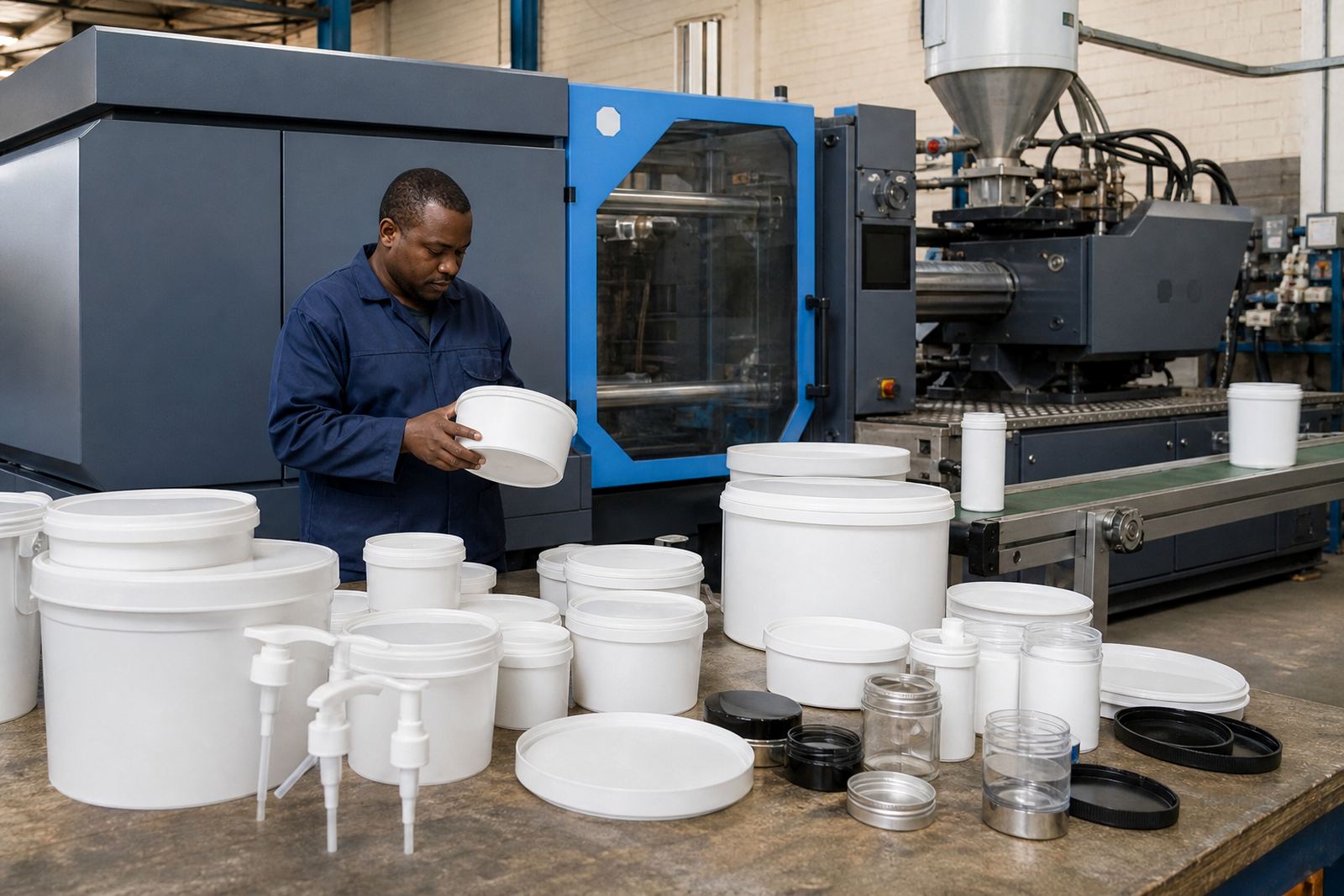
A typical frozen dessert set includes the tub, a matching lid, and a tamper seal where extra closure security is needed. Many packers also ask for a neck finish that suits a clean snap-fit, so the lid does not lift during transport or in store freezers. Where a printed sleeve or label is used, the container needs enough straight wall area to give the pack a neat face and decent shelf presence.
- Round tubs for premium and family dessert lines
- Square or rectangular tubs for tighter case packing
- Low-profile containers for wider shelf use
- Lids with a firm sealing edge for cold-chain handling
- Tamper seals for pack security and retail confidence
When a pack moves through a line, every part has to work with the same rhythm. If the lid is too tight, operators struggle. If it is too loose, the seal is weak and the product can take in odours from the freezer room.
Line Fit Checks for Filling and Carton Packing
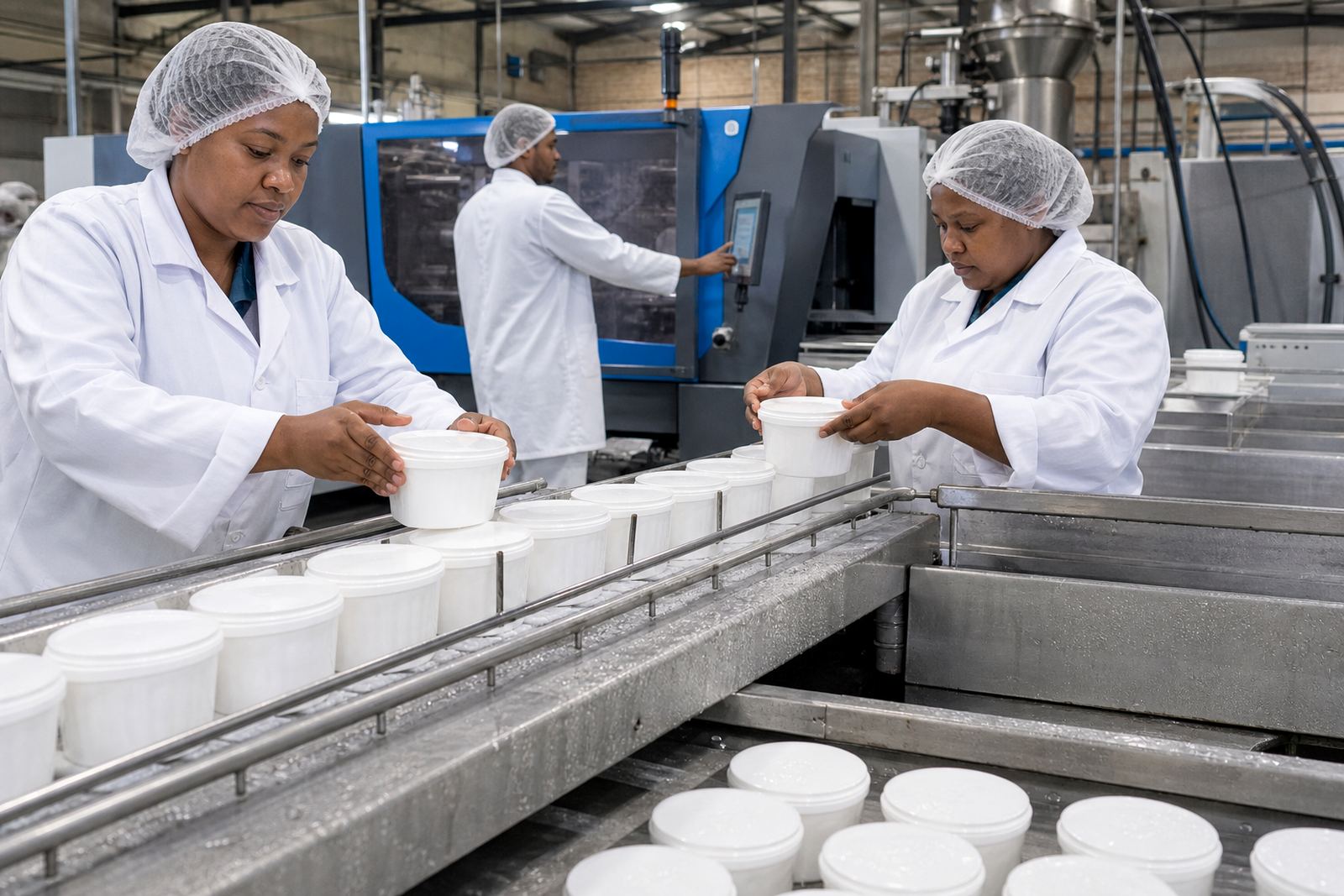
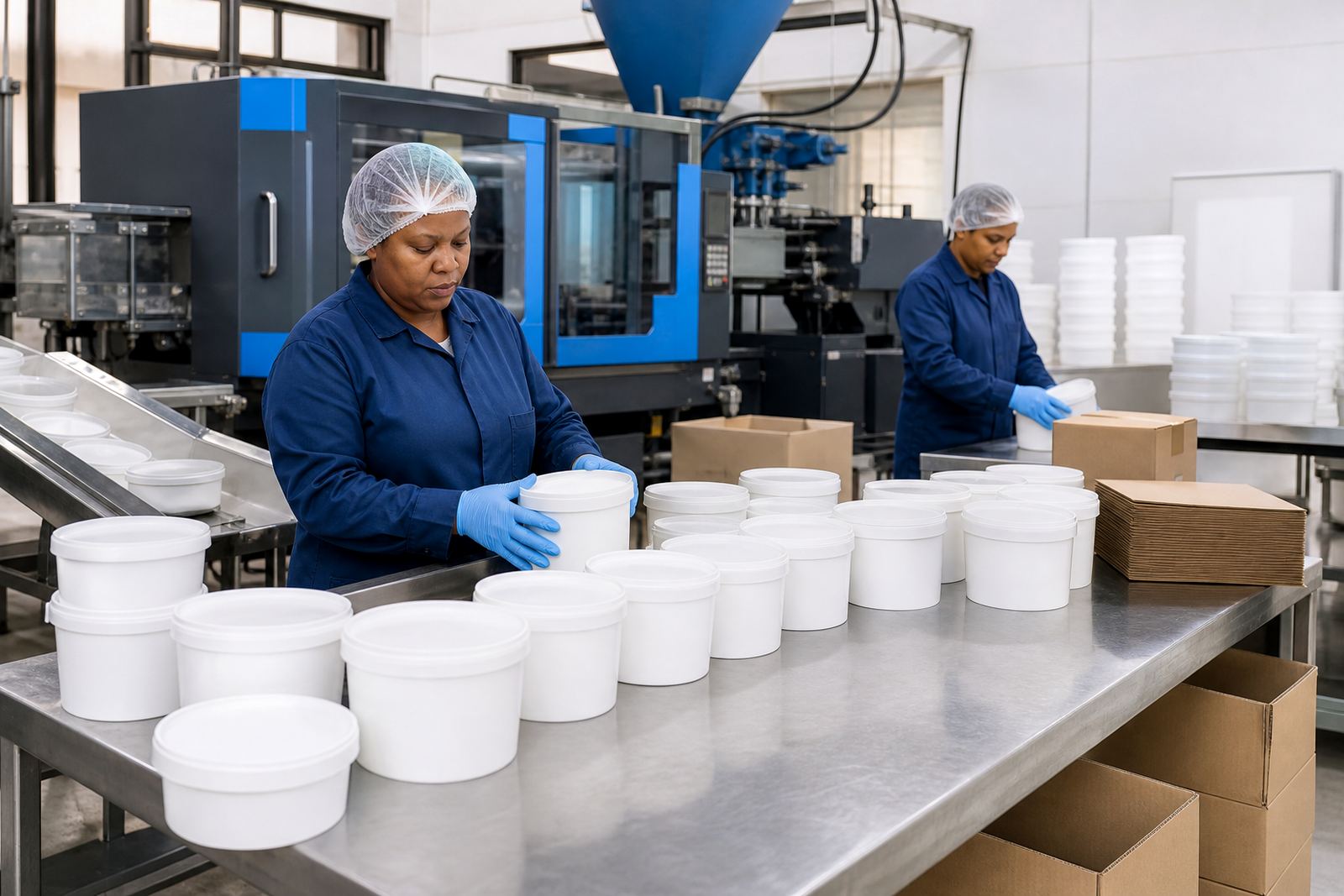
Frozen desserts usually move through a filling station, a closure point, then a hardening stage before secondary packing. That makes line fit checks important, because the tub has to sit properly on conveyors, under filler heads, and inside carton sleeves or crates. A slight change in diameter or lip height can affect how smoothly packs move from one stage to the next.
We look at pack size planning against the current line set-up, including grippers, guides, stacking patterns and case dimensions. If packs are nested too tightly they can stick during de-nesting. If they are too loose, the line wastes space and the pallet pattern becomes less stable. A test run with the actual product, even on a small batch, often shows where the detail needs adjustment.
In coastal towns like Durban or Port Elizabeth, where humidity and temperature shifts are part of daily handling, the pack also has to cope with extra condensation on outer surfaces. That can affect labels, cases and outer wrap if the secondary pack is too light.
Material Choices for Cold Chain Handling
Polypropylene is often used for frozen dessert tubs because it gives good rigidity and works well in moulded food packs. HDPE is also used where impact resistance and a slightly more forgiving feel matter more. Both materials can be used in food-safe packaging applications when the pack design and production controls are matched to the product requirements.
Material selection is not only about the plastic itself. The colour, wall finish and wall thickness all matter. A pale tub can show product colour well, while a darker pack may suit a more premium or seasonal range. For branded ranges, colour matching guidance helps keep different batch runs visually consistent across Johannesburg, Pretoria and the coastal delivery routes.
- Choose wall thickness that keeps the pack steady at freezer temperatures
- Allow enough lip detail for a secure lid seat
- Check how the container stacks when empty and filled
- Keep the label zone clean and straight where possible
- Match the material to the filling and hardening process
Common Set-Up Errors on Frozen Dessert Runs
One common mistake is treating a dessert tub like a general purpose container. Frozen products need different handling because the cold changes how plastics behave and how closures sit after chilling. Another problem is ordering a lid without checking the actual neck finish on the tub, which can lead to loose closures or a lid that bites too hard during packing.
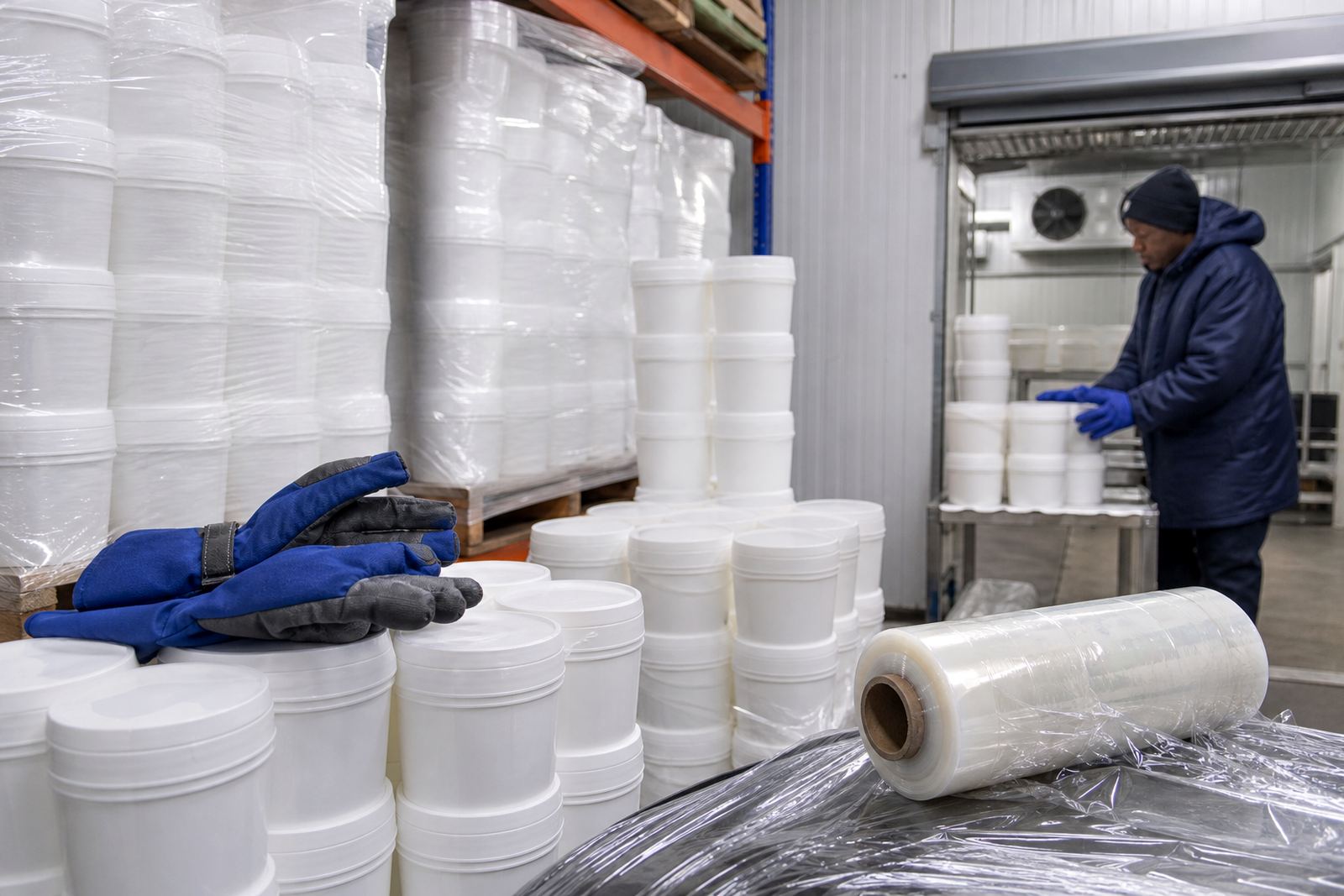
Another issue is overlooking secondary packing. A good tub can still arrive bruised if the outer carton pattern is weak, or if the pallet layout shifts during transport from Alberton to Cape Town. Some packers also under-specify the label panel, then find there is not enough space for batch coding, flavour detail, or the artwork they planned.
A smaller but real issue is trial volume. A frozen dessert pack that looks right on paper may still need a trial production run to check stacking, lid fit and presentation under real line conditions. That kind of testing saves a lot of rework later, especially when multiple tub sizes sit in the same product family.
Budget Bands in Rand for Dessert Packaging Projects
Budgeting for frozen dessert packaging depends on whether you need an off-the-shelf tub shape, a custom lid, or full mould development. For a straightforward container and lid selection, the spend may sit in the lower thousands of Rand for trial and setup planning. Once a custom tub profile, tamper seal detail, or new mould work enters the brief, the range moves up sharply.
As a working guide, packers often plan for a lower to mid-range project when they are adjusting an existing format, and a higher range when they need new tooling, test runs and line checks. Secondary packing advice, stock run planning and material selection usually sit inside the broader project budget rather than as separate pieces. Exact figures depend on tub size, tooling complexity, finish detail and the number of units needed for the first production run.
For frozen dessert lines in Johannesburg, Durban, Pretoria, Cape Town and Port Elizabeth, it helps to map the pack budget against the full cold-chain route. That includes line fill, freezer storage, dispatch cartons and pallet stability, not only the container itself.
Planning The Next Dessert Pack Changeover
When a frozen dessert range changes flavour, size or pack style, the container should change with it in a controlled way. A small adjustment to the lid or tub can improve handling, reduce breakage and tighten the look of the pack on shelf. The best results usually come from matching the moulded pack to the way the product is filled, stored and shipped, rather than forcing the line to adapt around a weak container.
Plastic Factory works from Alrode, Alberton and supplies businesses across South Africa, including Johannesburg, Durban, Cape Town, Pretoria and Port Elizabeth. For dessert pack projects, that means practical support on tub design, lid development, tamper seal design, material selection, mould development, trial production runs and stock run planning. The focus stays on a pack that works in the freezer room and on the packing floor, not only in the sample tray.