Hair packs that sit neatly on a shelf or trolley
Hair treatment packs need packaging that opens cleanly, closes securely and stays presentable in busy salon stock rooms. Wider tubs are often chosen for masks, deep treatments and larger retail fills because they give good product access and an even fill line, which helps on fast packing runs. In practice, the pack size is usually set around the product texture, the filling line, and how the container will be lifted, stacked and displayed.
For hair care packs, the container shape matters just as much as the volume. A shallow wide tub can suit thick creams and hair masks, while a taller tub may work better where space on shelf is tight. If the lid has to be removed often, a smooth rim and a reliable snap fit make day-to-day use easier for the end user.
Typical set-up for masks and treatment tubs
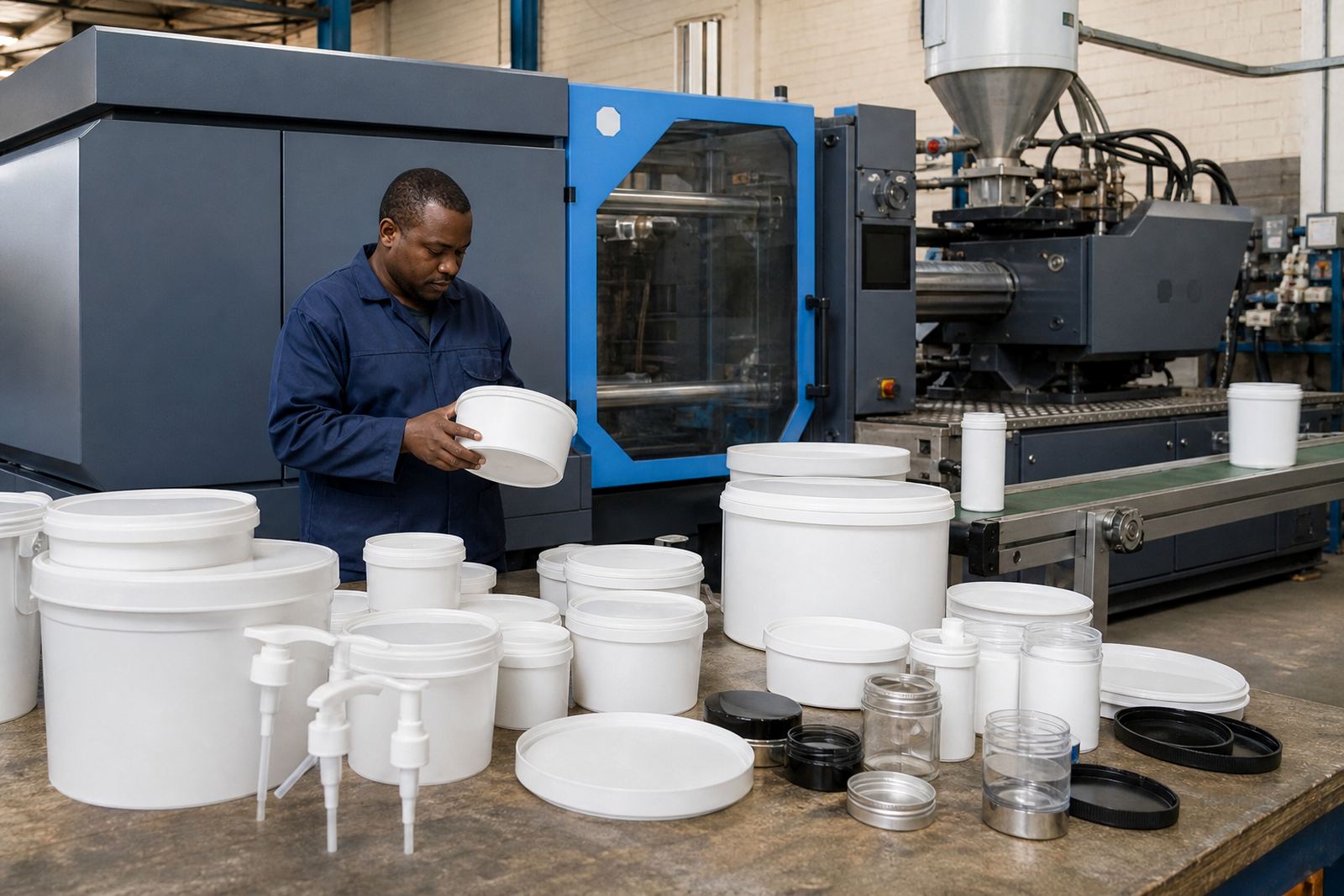
Most hair treatment lines use a small group of matching parts rather than a single container on its own. The usual set includes a polypropylene or HDPE tub, a matching lid, and where needed a tamper evident seal. These materials are commonly selected for packaging because they are light, durable and suitable for a wide range of personal care fills.
- Wide-mouth tubs for masks, conditioners and thicker treatments
- Matching lids with a clean closing action
- Tamper seals for retail packs that need a first-open indication
- Colour guidance for brands that want a consistent shelf look
- Trial runs to test filling, capping and label placement
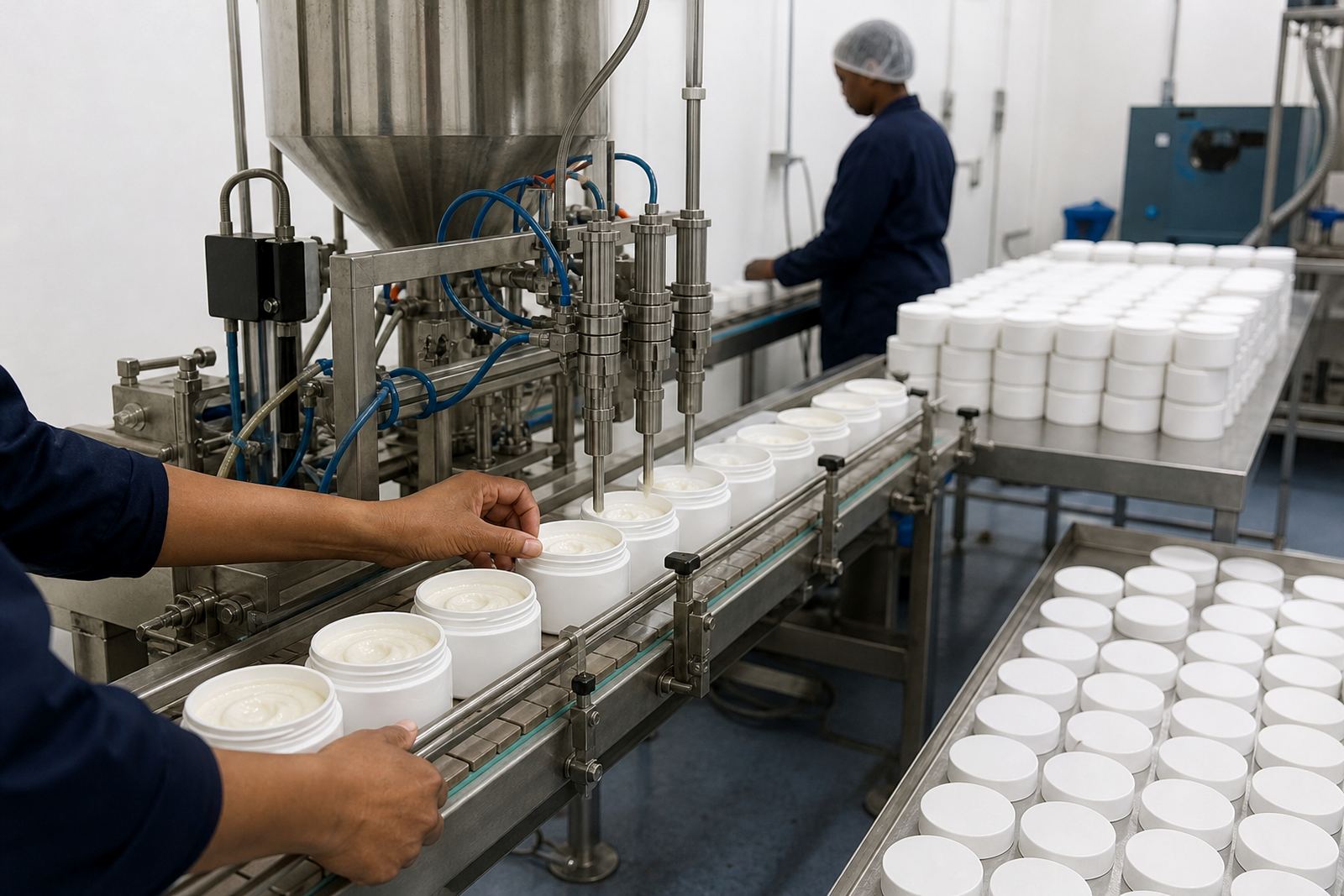
During pack development it helps to check how the product behaves in the container. Thick formulas may bridge at the fill point, while lighter creams can leave a visible meniscus if the rim height is not matched properly. A lid that fits too tightly can slow packing, but one that is too loose creates handling problems in transit, especially on longer routes to Durban, Cape Town or Port Elizabeth.
Planning the pack around your filling line
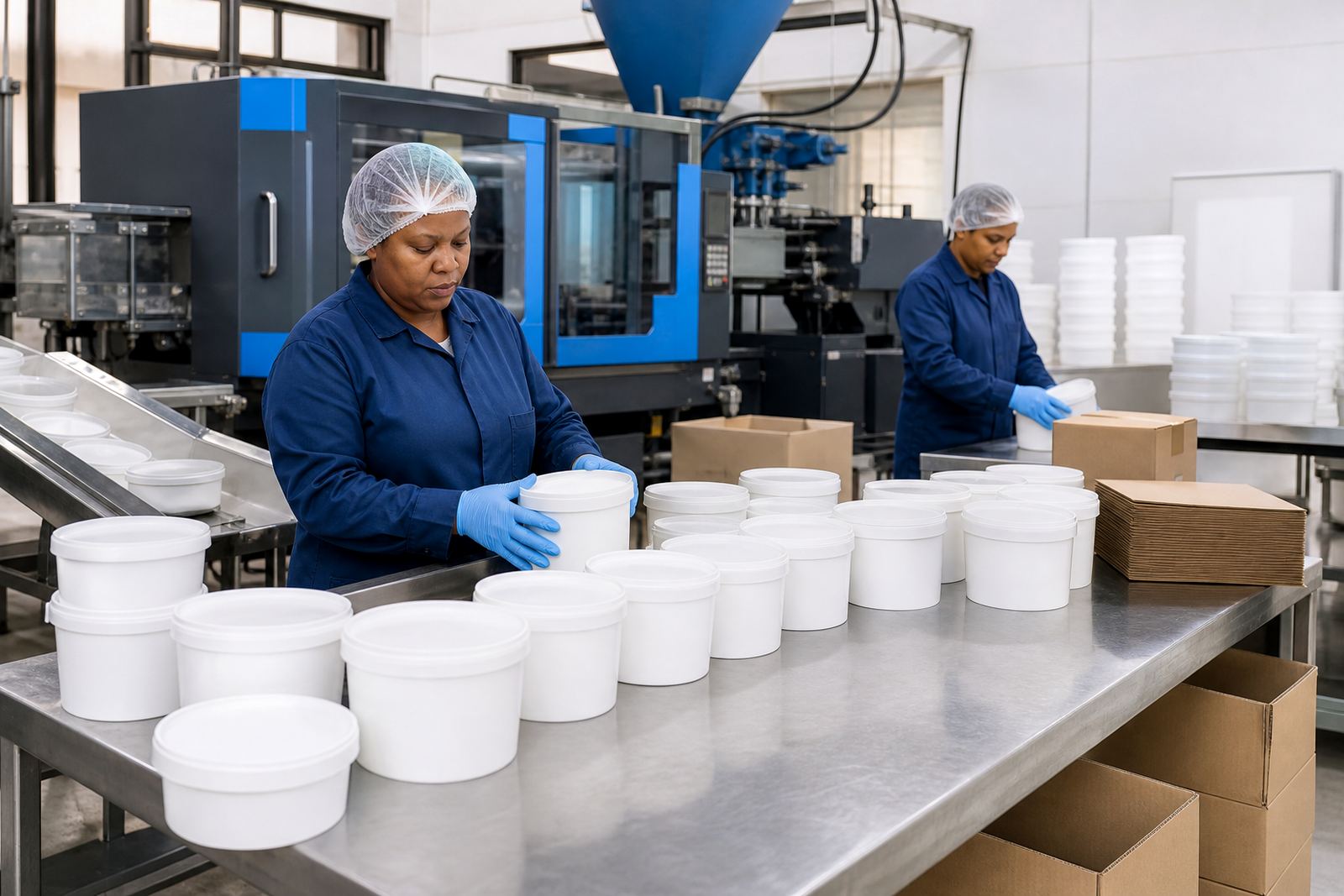
Hair treatment packs work best when the tub, lid and seal are planned around the actual line layout. On a manual line, packers need a rim that is easy to grip and a lid that seats without too much force. On a semi-automatic line, the neck finish and outer diameter must be checked against the capping head and any label applicator used on the floor.
Secondary packing matters too. Tubs that travel in cartons need enough top clearance to avoid lid scuffing, and the carton pattern must keep the units upright. If the pack is used for salon-size products, the outer carton or shrink wrap should support handling by staff who move stock in bulk, not just by the piece. That part is often overlooked, and it shows up later as crushed corners or opened lids.
- Confirm the target fill volume before mould selection
- Check lid seating on the actual filling table
- Allow space for labels, batch codes and date marks
- Plan carton count against shelf and dispatch needs
- Match colour consistency across tubs and lids
Common mistakes on hair treatment packaging lines
One common mistake is choosing a tub that looks good but does not suit the formula. Heavy masks need a container with enough rigidity to hold shape when stacked, while thin serums or runnier creams need better sealing and a lid profile that keeps drips under control. Another issue is ignoring the end user. A salon pack that is too deep can become awkward to scoop from, especially when the product level is low.
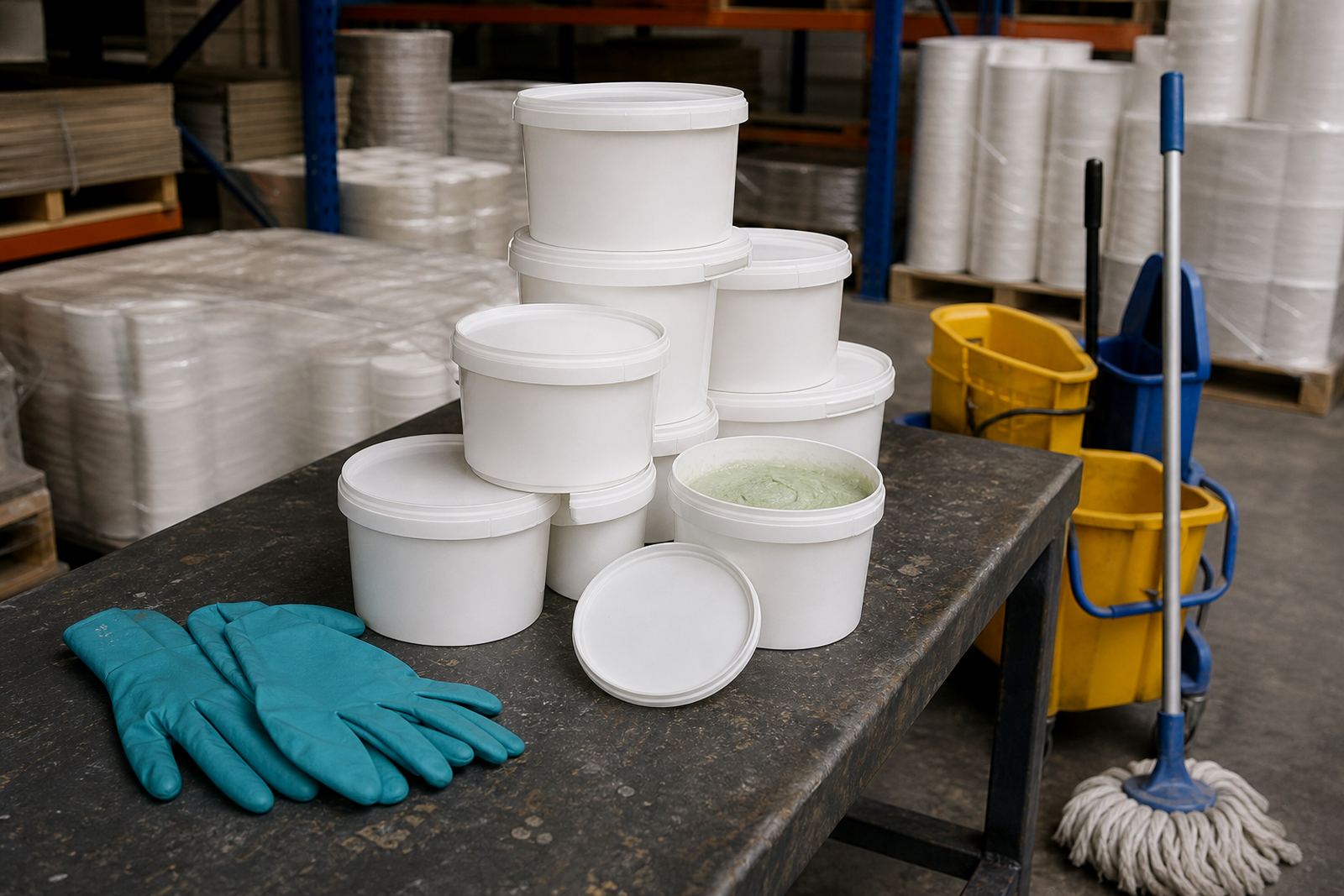
Another frequent problem is leaving tamper protection until the last minute. If the lid and seal are not developed as a pair, the line can slow down and the pack may not present well on shelf. Some businesses also forget how colour behaves across batches. Even a slight shift in colour can be obvious in a row of white or pastel hair care tubs, so colour matching guidance is worth planning from the start. It avoids a lot of rework later.
There is also the issue of label space. A rounded wall can reduce straight panel area, and that makes front labels harder to place cleanly. Once the artwork is printed, changing the container shape is costly, so the pack profile should be confirmed before long production runs are committed.
Material choices for salons, retailers and bulk buyers
Polypropylene and HDPE are both common for hair treatment packs, but they are not identical. Polypropylene is often used where stiffness and a clean hinge action are useful, while HDPE is valued for its toughness and chemical resistance across many personal care applications. The final choice depends on the product consistency, storage conditions and the type of look the pack needs to project on shelf.
For salons and retail packs, food-safe materials are often preferred where the same packing discipline is used across personal care and other consumer goods. Good material selection also helps when stock is held in warm storerooms or moved across coastal routes where humidity can affect outer cartons and labels. In South African conditions, practical packaging has to cope with handling, not just the fill stage.
Plastic Factory works from Alrode, Alberton, and supports delivery into Johannesburg, Durban, Cape Town, Pretoria and Port Elizabeth. That matters when stock planning has to cover multiple depots or regional pack lines, because the same tub format may need to be held in more than one place to keep production moving. The container should not be the weak point in that chain.
Budget bands for hair treatment packs in rand
Budget for hair treatment packs usually moves with tooling, volumes, lid style and whether tamper seals are part of the pack. A standard tub and lid combination is usually the least complex option, while a custom mould or a new lid development raises the cost profile because the tooling and trial work are more involved. Packs for salon-size products can also use larger volumes, which changes material usage and unit pricing.
For planning purposes, smaller development projects may sit in a lower entry band, while full custom mould development and trial production runs can move into a higher range. The exact rand figure depends on pack size, colour, seal design and order pattern, so it is better to cost the full packaging set rather than only the tub. Packing line changes, extra cartons and label revision can add to the total too, and that is often missed in the first pass.
- Standard tubs and lids for routine fills
- Custom tub shape development for a specific product line
- Tamper seal design where retail presentation matters
- Trial production runs for line fit and closing checks
- Stock run planning for larger seasonal demand
What the packaging team usually checks before release
Before a hair treatment pack is released for routine use, the team usually checks a few practical points on the line and in dispatch. The lid should close evenly, the seal should sit correctly, and the tub should stay stable when moved in cartons or stacked on a pallet. It sounds ordinary, but that ordinary work prevents a lot of spoilage and complaints later.
Colour, finish and label position should all be checked under the same light used on the packing floor. A tub can look perfect in one part of the room and slightly off in another, so a final visual pass is worth the effort. For brands working with white or pale coloured treatment packs, that final pass is often the moment where minor defects are picked up before stock goes out.
When the pack is set properly, the result is tidy on shelf and practical in the salon. The product is easy to fill, easy to close and easier to move through local supply chains without unnecessary handling trouble.
People behind the packaging line in Alberton
Plastic Factory is based in Alrode, Alberton, with work led by Thabo Letsoalo and supported by a team that handles sales, production, quality, dispatch and customer support. That mix matters on hair treatment projects because the pack usually needs more than one check, from mould development through to stock planning and final delivery. Naledi Sauls, Johan Kekana, Ayesha Oosthuizen, Sibusiso Hartnick and Carla Naidoo each sit close to a different part of the process.
For businesses packing masks, treatments and other salon-size products, the useful part is practical coordination. The container must suit the formula, the lid must close properly and the dispatch plan must match the order pattern. That is where generic packaging knowledge becomes real work on the floor, with no wasted motion and no unnecessary changeovers.
Hair treatment packaging works best when the tub is treated as part of the process, not an afterthought. Once the pack fits the line and the shelf, the rest of the operation settles into place.